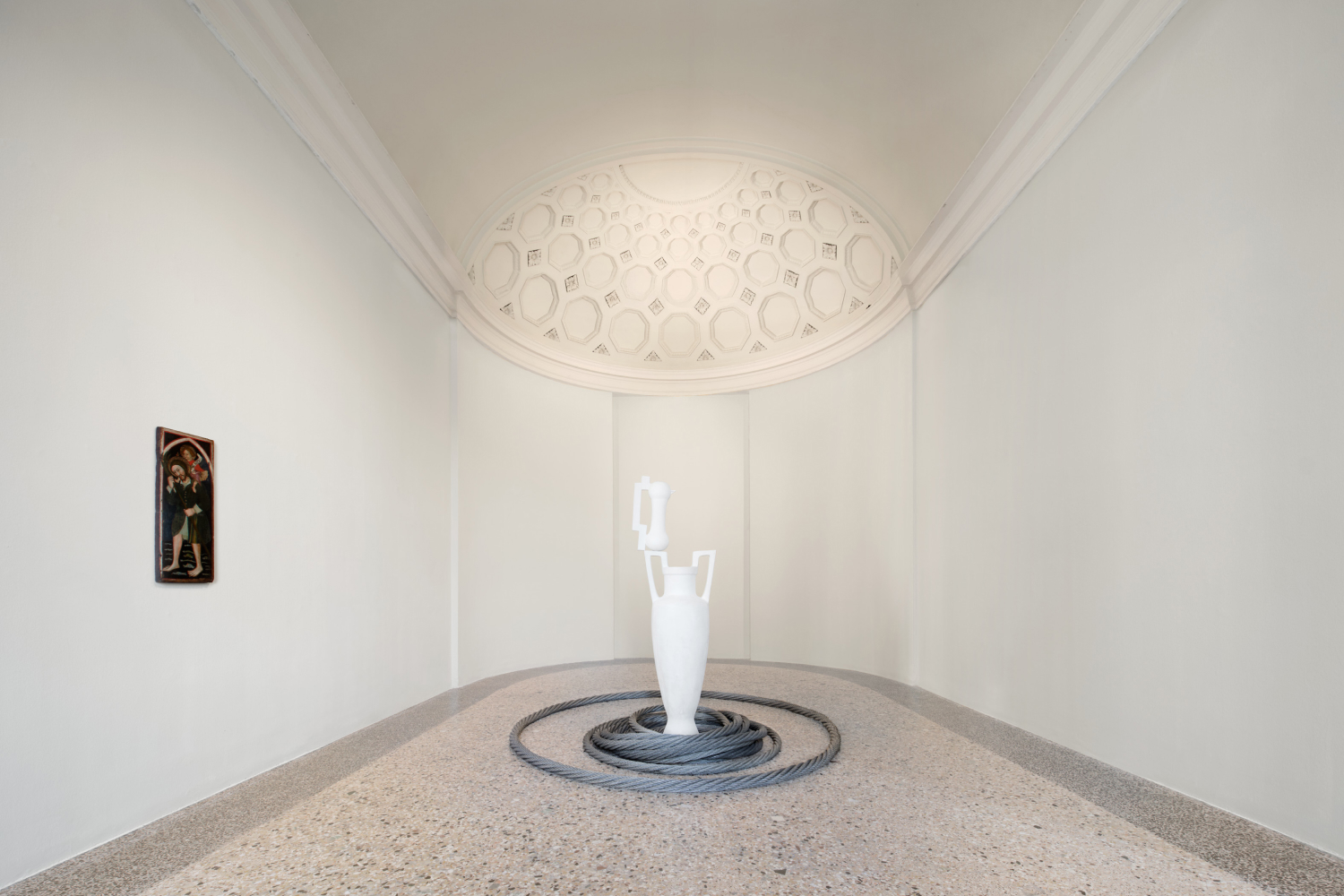
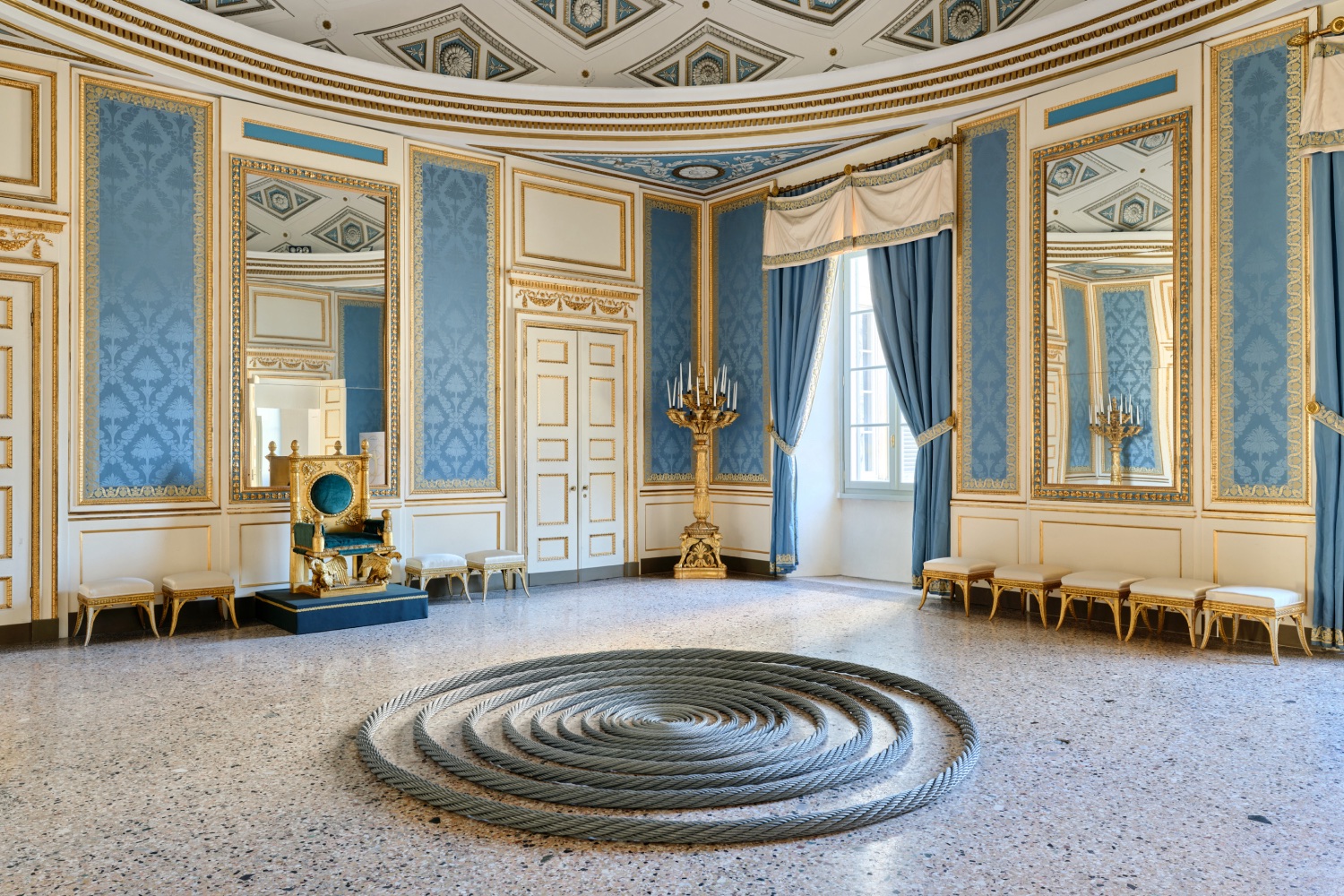
“Remo Salvadori” - First room, Palazzo Reale, Milan On view in this room is Continuo infinito presente, 1985 (2007), a work composed of 16 rings, made of interwoven steel cables, here presented in a concentric configuration.
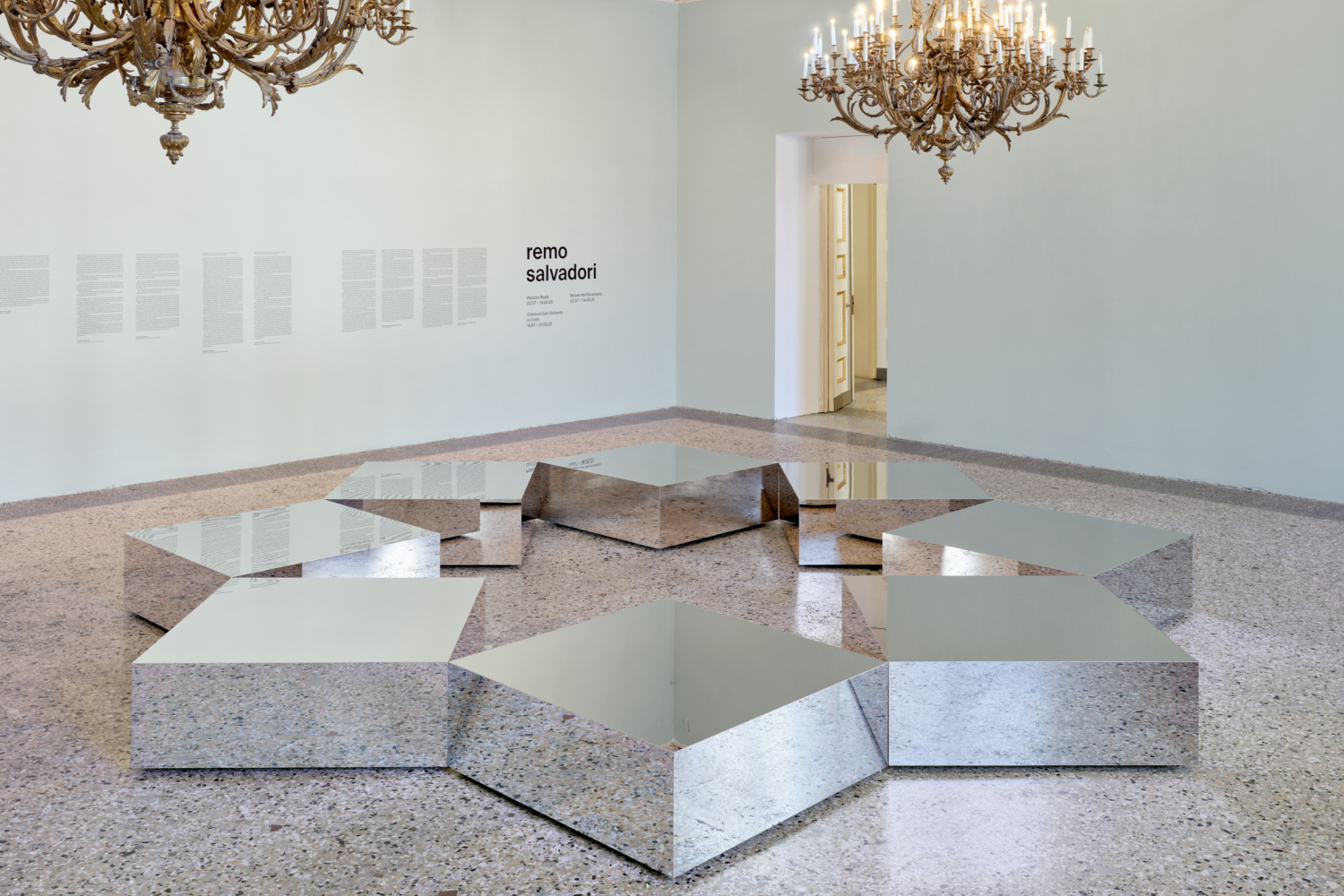
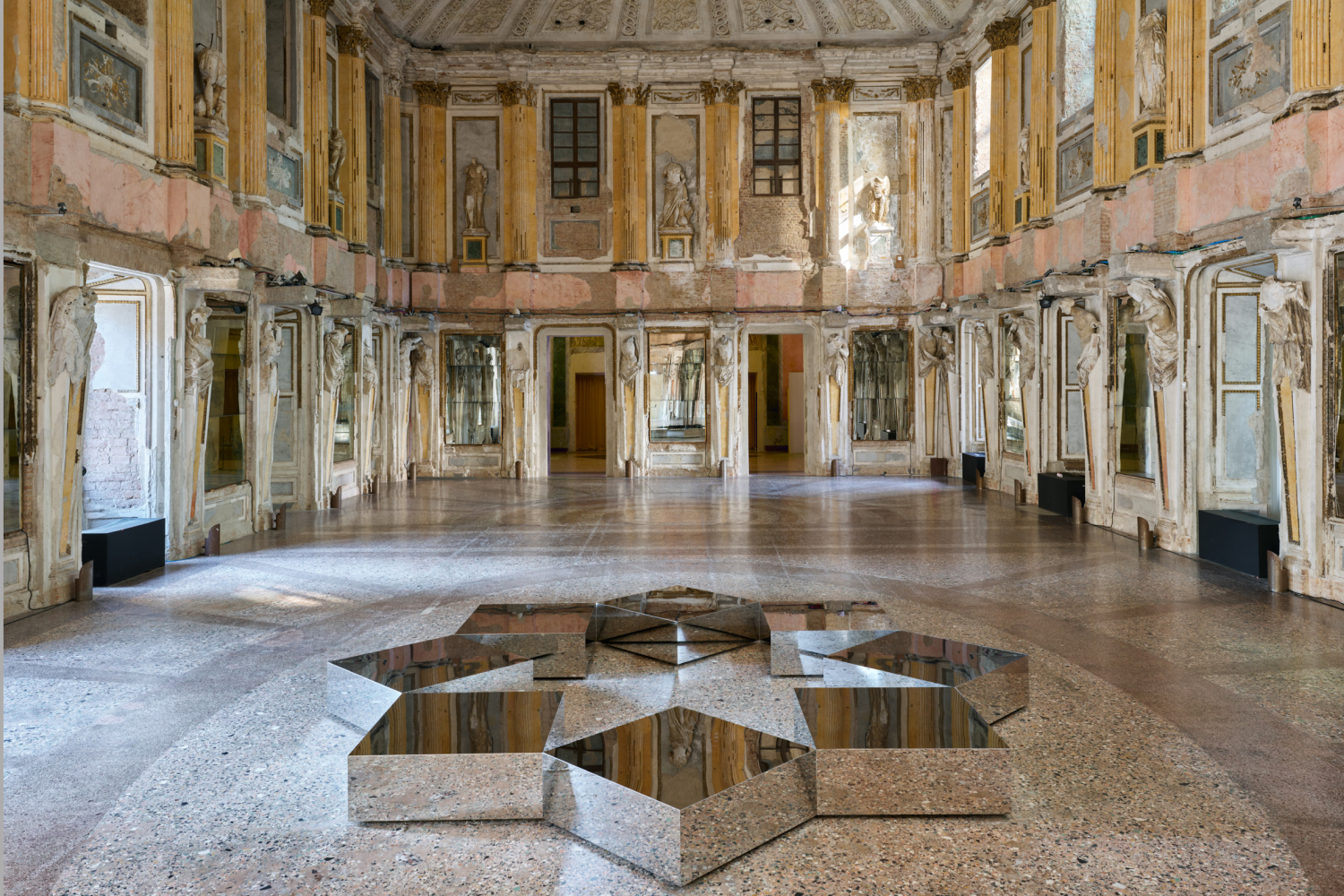
“Remo Salvadori” - Second room, Palazzo Reale, Milan On display here is No’ si volta chi a stella è fisso (Fixed Upon a Star One Turns Not), 2004 (2025), previously on view in the Sala delle Cariatidi. The work is composed of eight polished metal par- allelepipeds arranged in such a way that the empty space at their center recalls a star.
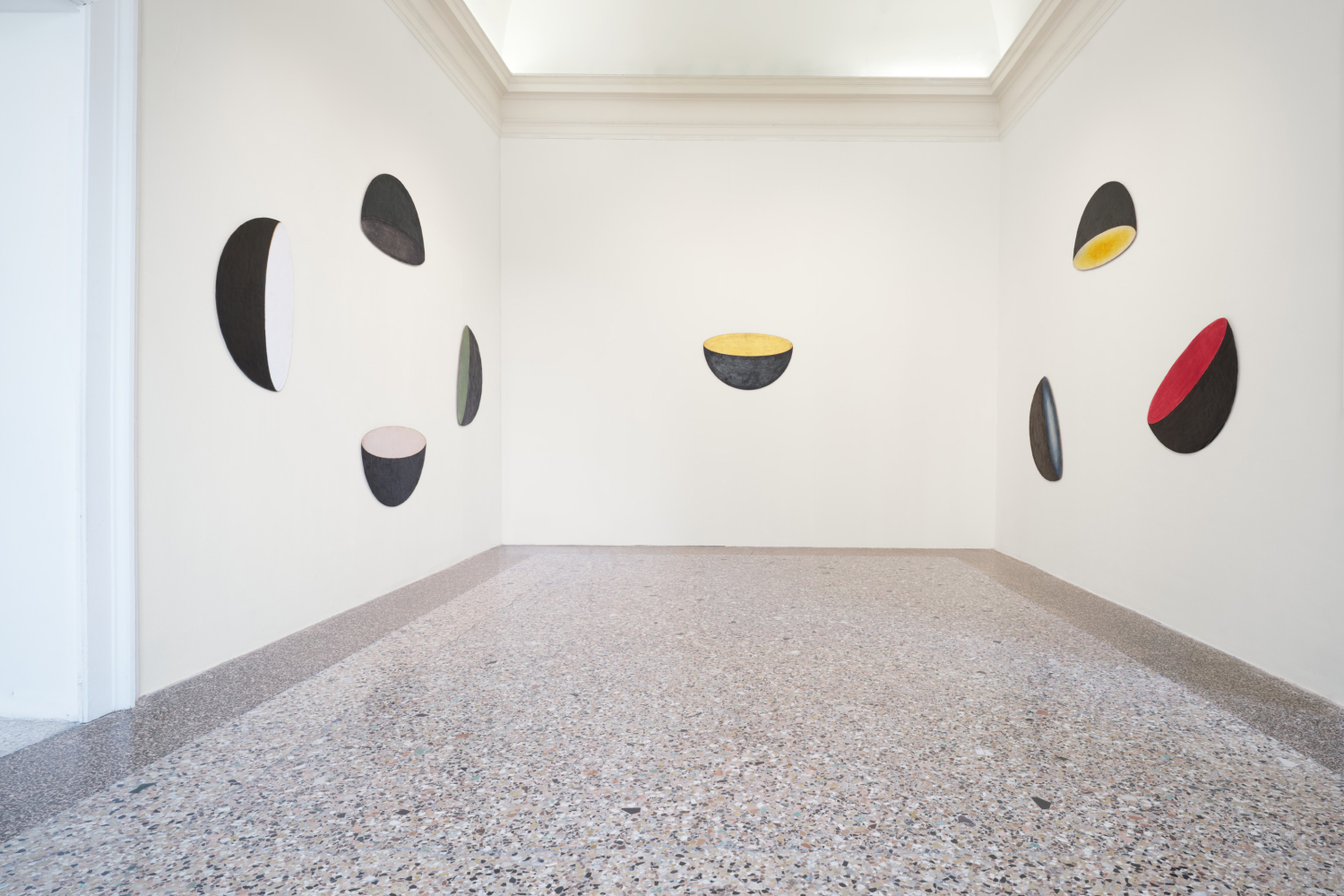
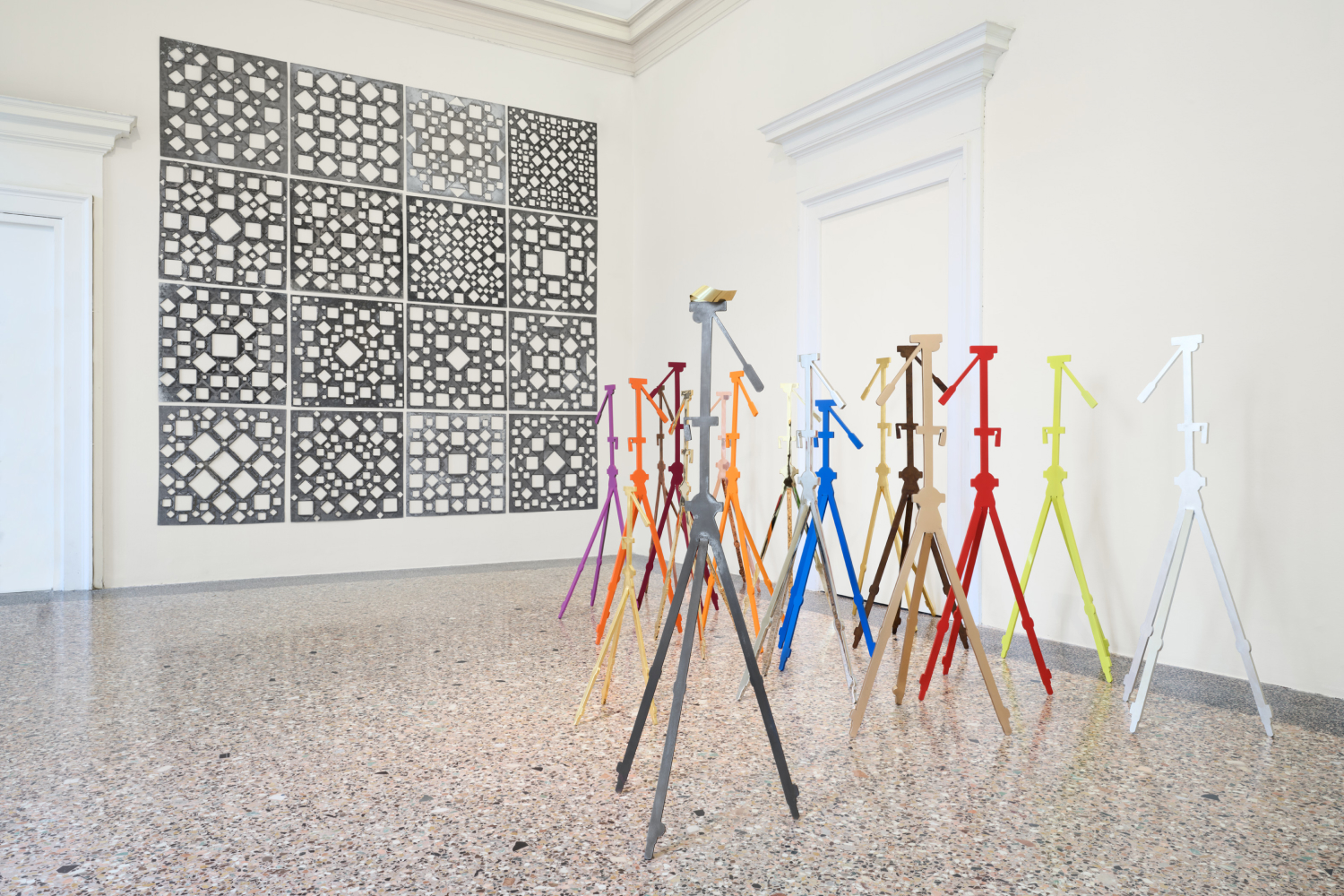
“Remo Salvadori” - Third room, Palazzo Reale, Milan On the walls of this room a series of works are installed, which all have the same title: Germoglio (Sprout). Among them is one of the earliest, shown in the artist’s solo exhibition at the Centre National d’Art Contemporain de Grenoble in 1991.
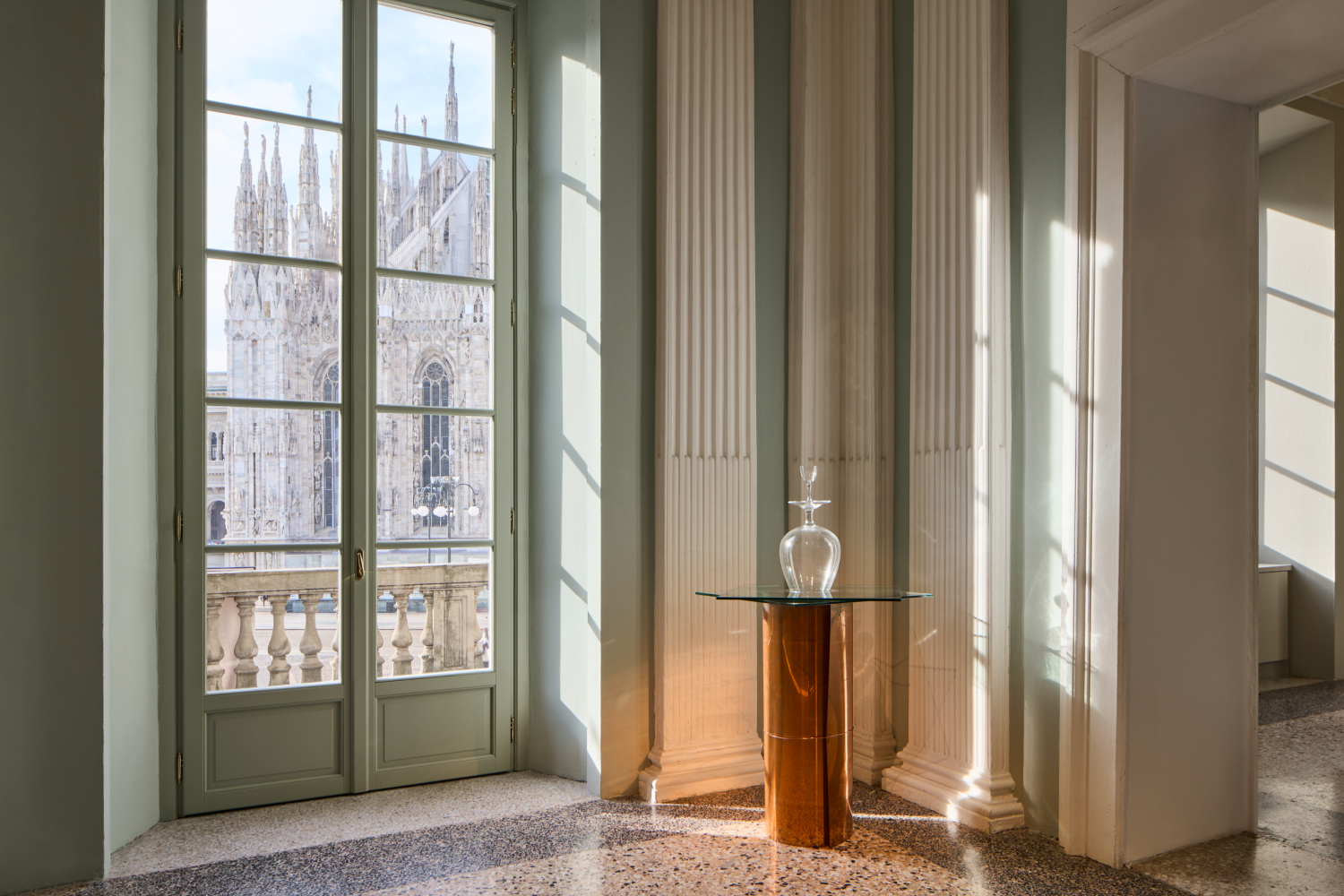
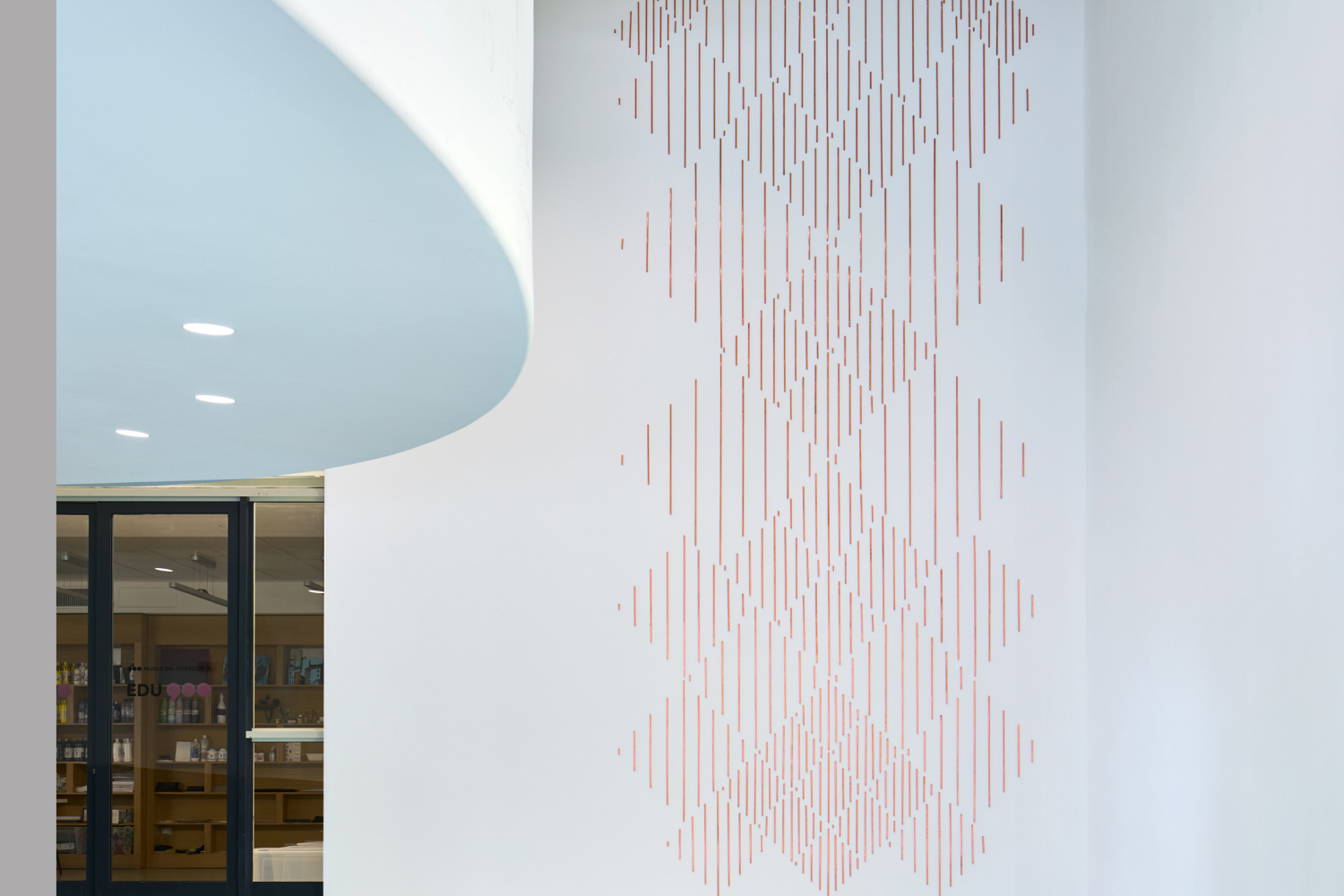
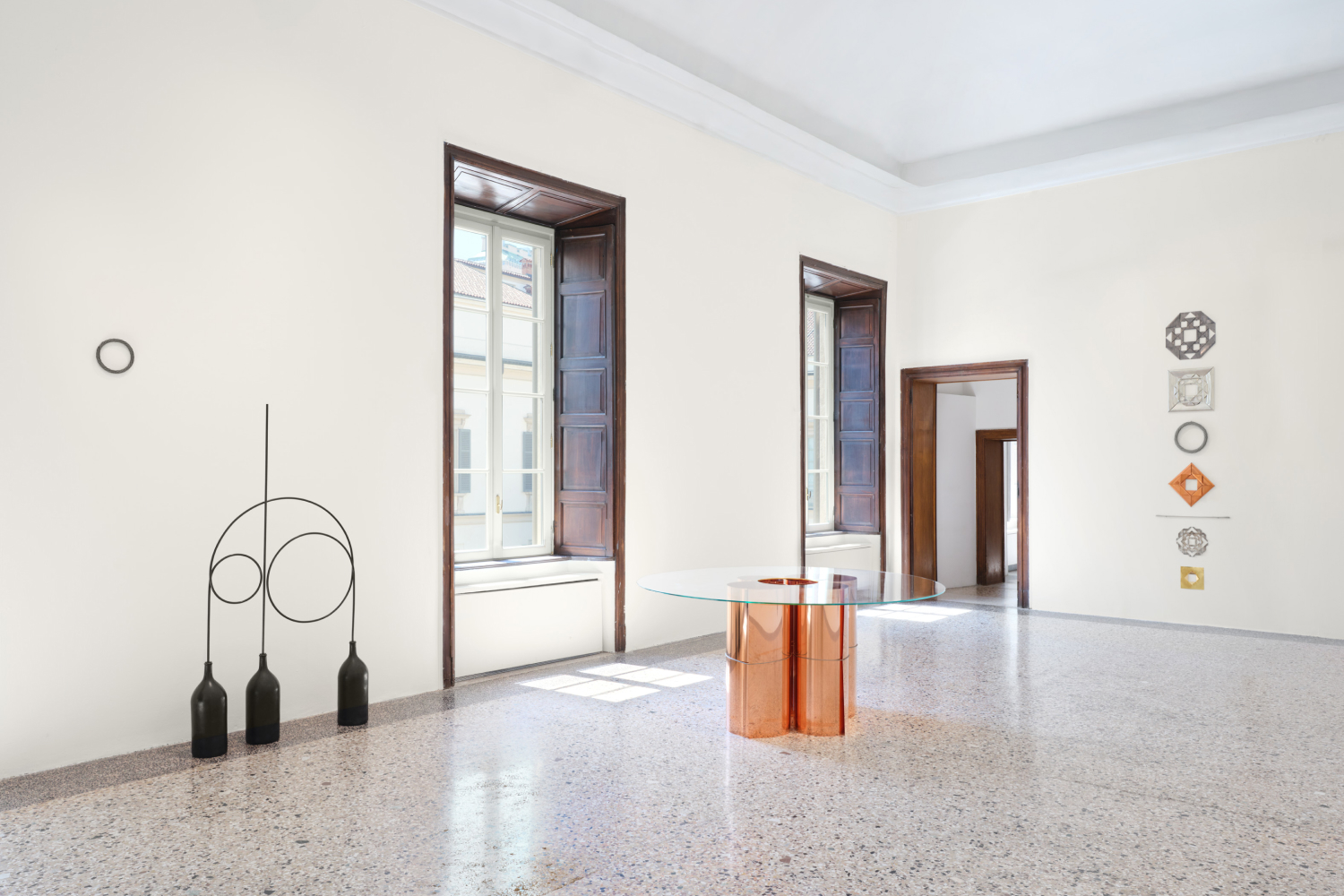
“Remo Salvadori” - Fourth room, Palazzo Reale, Milan The form made of copper utilized in the various versions of Verticale (Vertical), of which some examples are on display in this room, recalls that of a column and constitutes a base on which different objects made of different materials (wood, iron, copper, tin, ceramic, glass containers filled with mercury or water) are set each time.
“Remo Salvadori” - Fifth room, Palazzo Reale, Milan The exhibition conceived for Palazzo Reale has been developed on the basis of different modes of display. In some cases there are works that create a dense visual mesh, as in the case of the Verticali, while in others there are single works on which a power- ful energy is focused. While visitors may not be able to grasp their meaning immediately, they will not only be attracted by their simple and at the same time complex forms, but also perceive the inten- sity of their content.
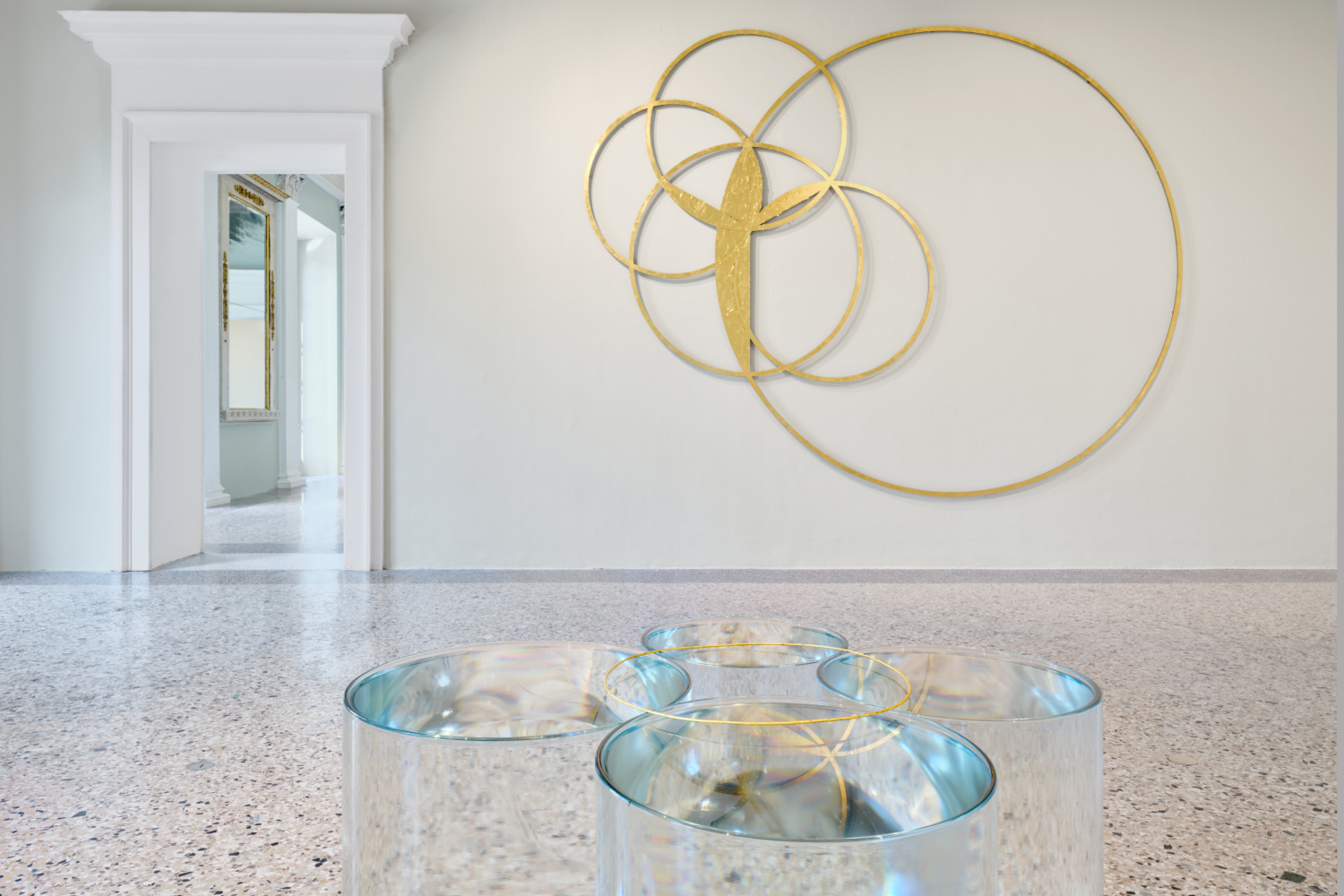
“Remo Salvadori” - Sixth room, Palazzo Reale, Milan The figure of the “cup” originated out of the artist’s research into the form of the circle at the beginning of the 1980s. It would later find full expression in the work Stanza delle tazze (Room of Cups), 1986, presented for the first time at Mario Pieroni’s gallery in 1986 and then in the group exhibitions Correspondentie Europa at the Stedelijk Museum in Amsterdam (1986) and Eternal Metaphors: New Art from Italy at the Phillips Collection in Washington DC (1989).
“Remo Salvadori” - Seventh room, Palazzo Reale, Milan In this room are displayed several works that point to multiple read- ings of Nel momento (In the Moment), such as Nel momento, 1974 (2000), made of lead, Nel momento, 1974 (2016), made of lead and copper and Tazza nel momento (Cup in the Moment), 1995 (2004), composed of forty elements made of lead, tin, iron, copper, silver and gold.
“Remo Salvadori” - Eighth room, Palazzo Reale, Milan Along with more versions of Nel momento – Nel momento, 1974 (2007), and Nel momento, 1974 (2022) – this room houses some emblematic works that have marked important phas- es in Salvadori’s research.
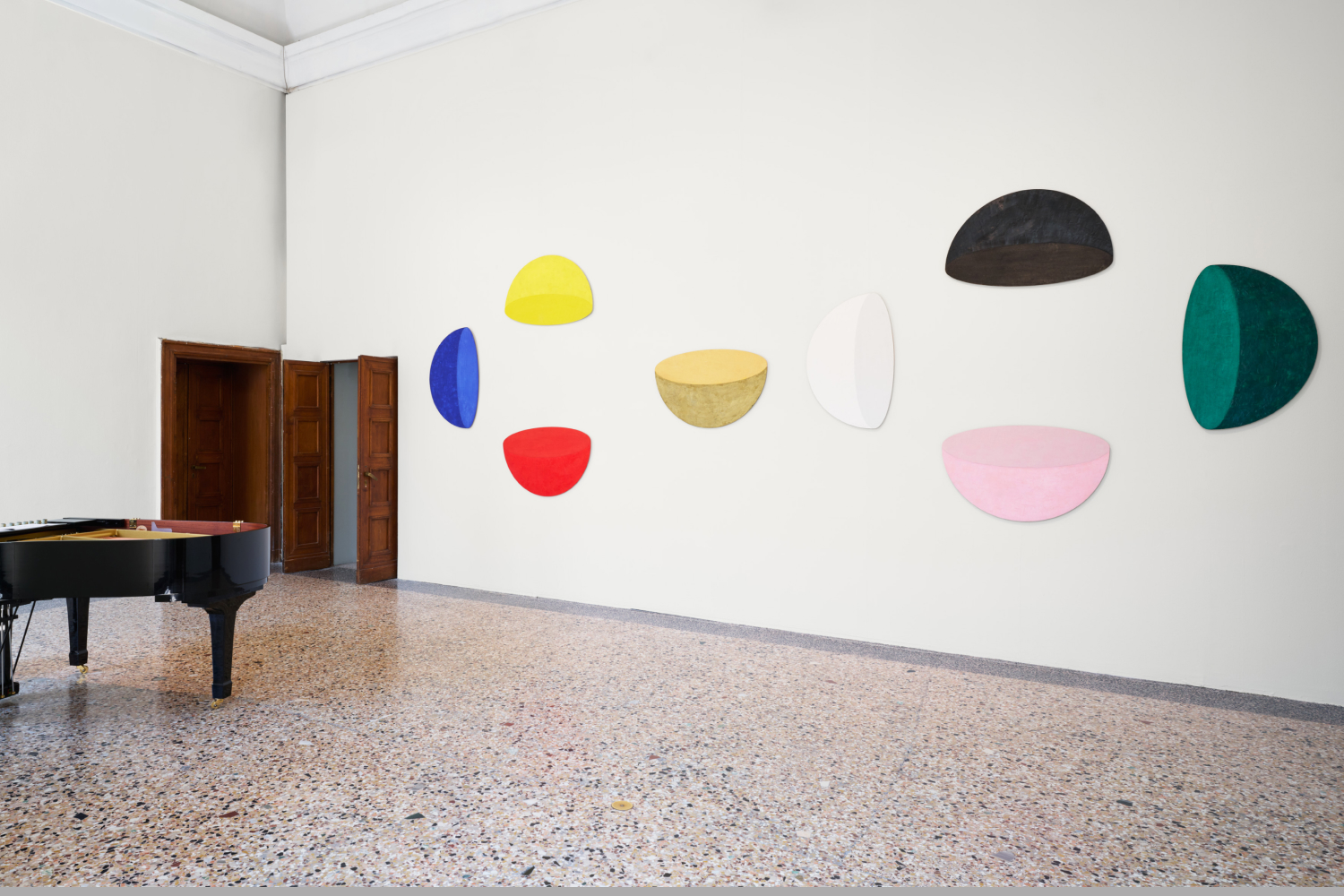
“Remo Salvadori” - Ninth room, Palazzo Reale, Milan In the last room of the exhibition we find a piano, while on the wall is installed a more recent version of Stanza delle tazze (Room of Cups), 1986 (1991), which is ideally linked to the first work with the same title presented in Room 138.
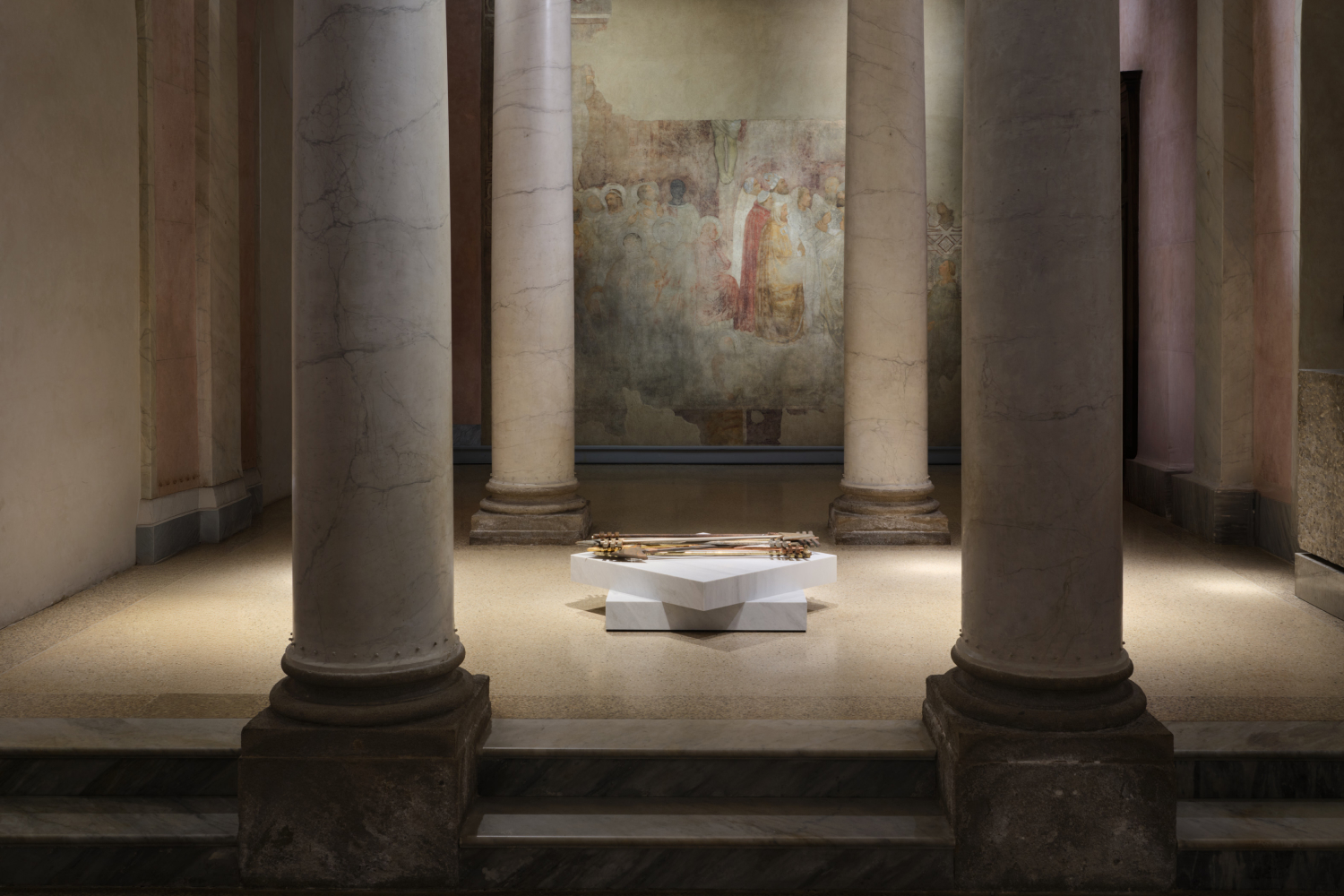
“Remo Salvadori”, Church of San Gottardo in Corte, Milan In the church of San Gottardo in Corte, the work 10 arrows in mineral colours, 1969-1970, enters into dialogue with the sacred architecture, offering a contemplative experience outside the museum space. The work is located in the centre of the space in front of the fresco by the Giotto school and is delimited by four columns.
10 frecce nei colori di minerali is exhibited in relation to Stella, 2025, created specifically for this occasion. The work finds an ideal relationship with the work above it and refers in its form to a cosmological dimension.
“Remo Salvadori”, Museo del Novecento, Milan The significance and concentration of meaning of the elements present constitute a system of relationships in which the various works enhance each other without creating contrasts or juxtapositions. They are thus charged with intensity, thrive on delicate references and allude to content that never appears immediate or predictable.
“Remo Salvadori”, Sala delle Cariatidi and Sala del Piccolo Lucernario, Palazzo Reale, Milan On this occasion, visitors have the opportunity to encounter, through what the artist himself has described as “a very powerful formal synthesis”, some of his seminal works, which encapsulate his entire poetic universe in their essentiality.
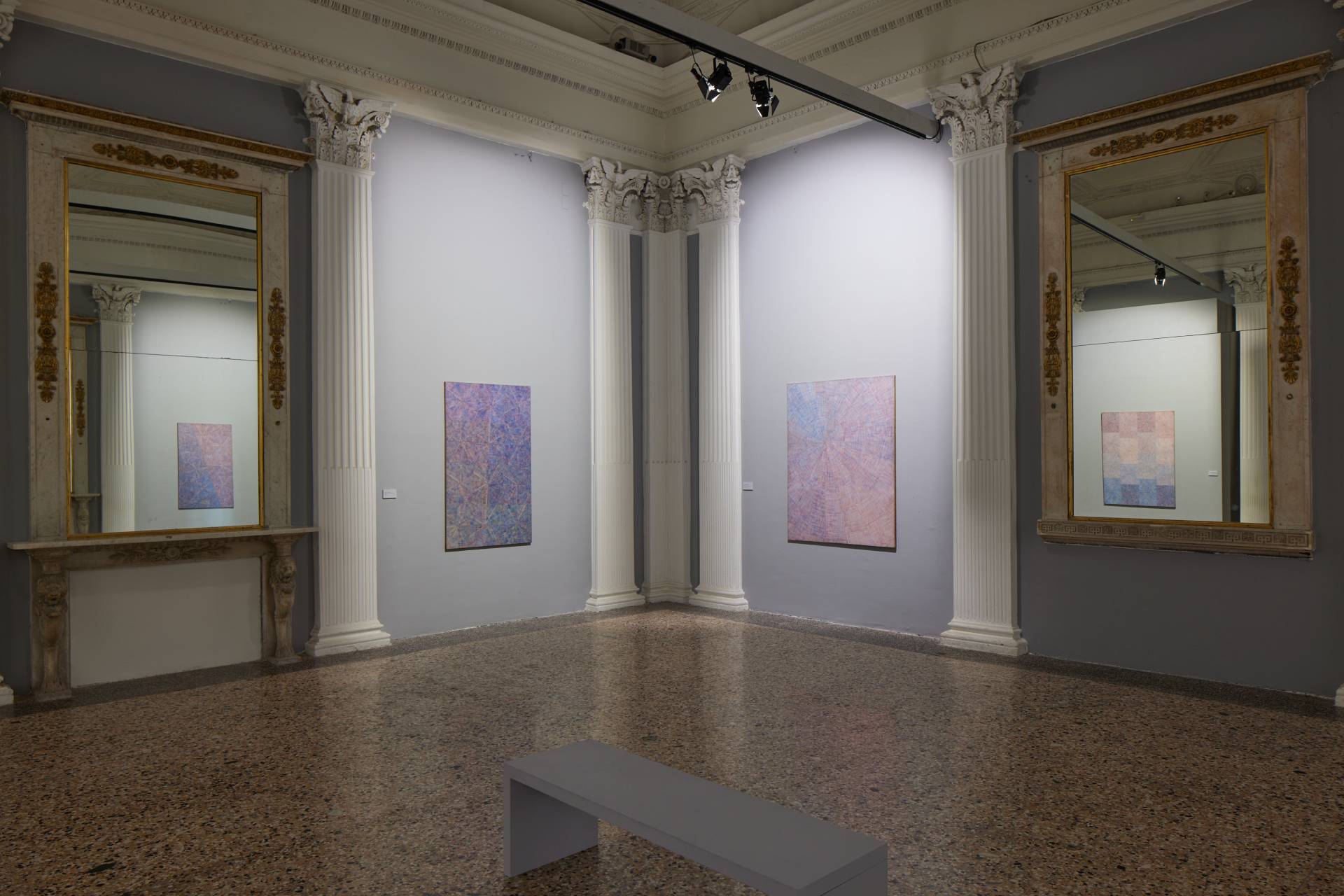
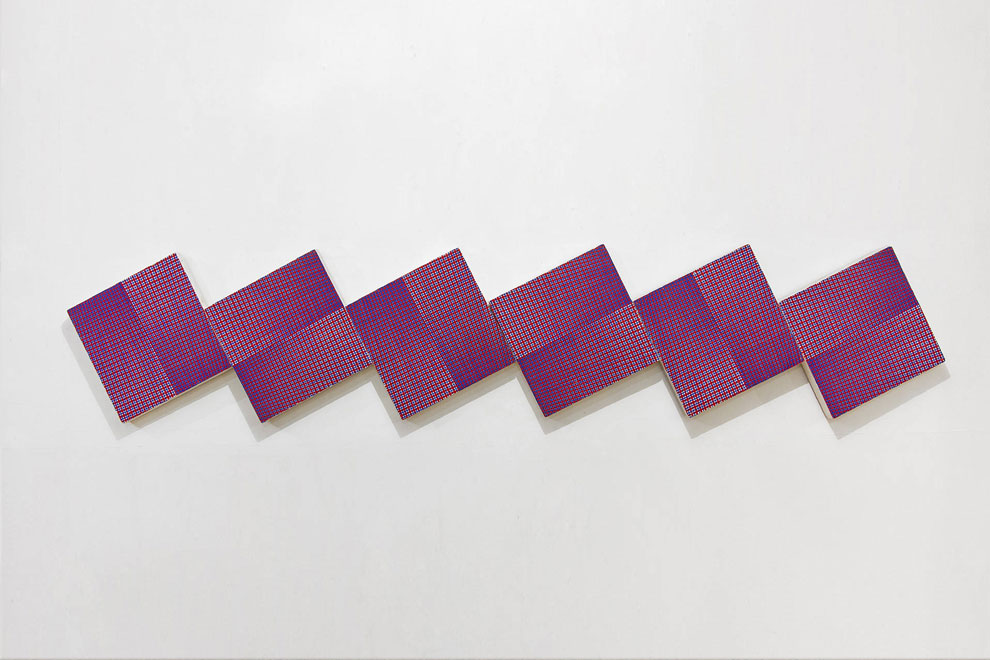
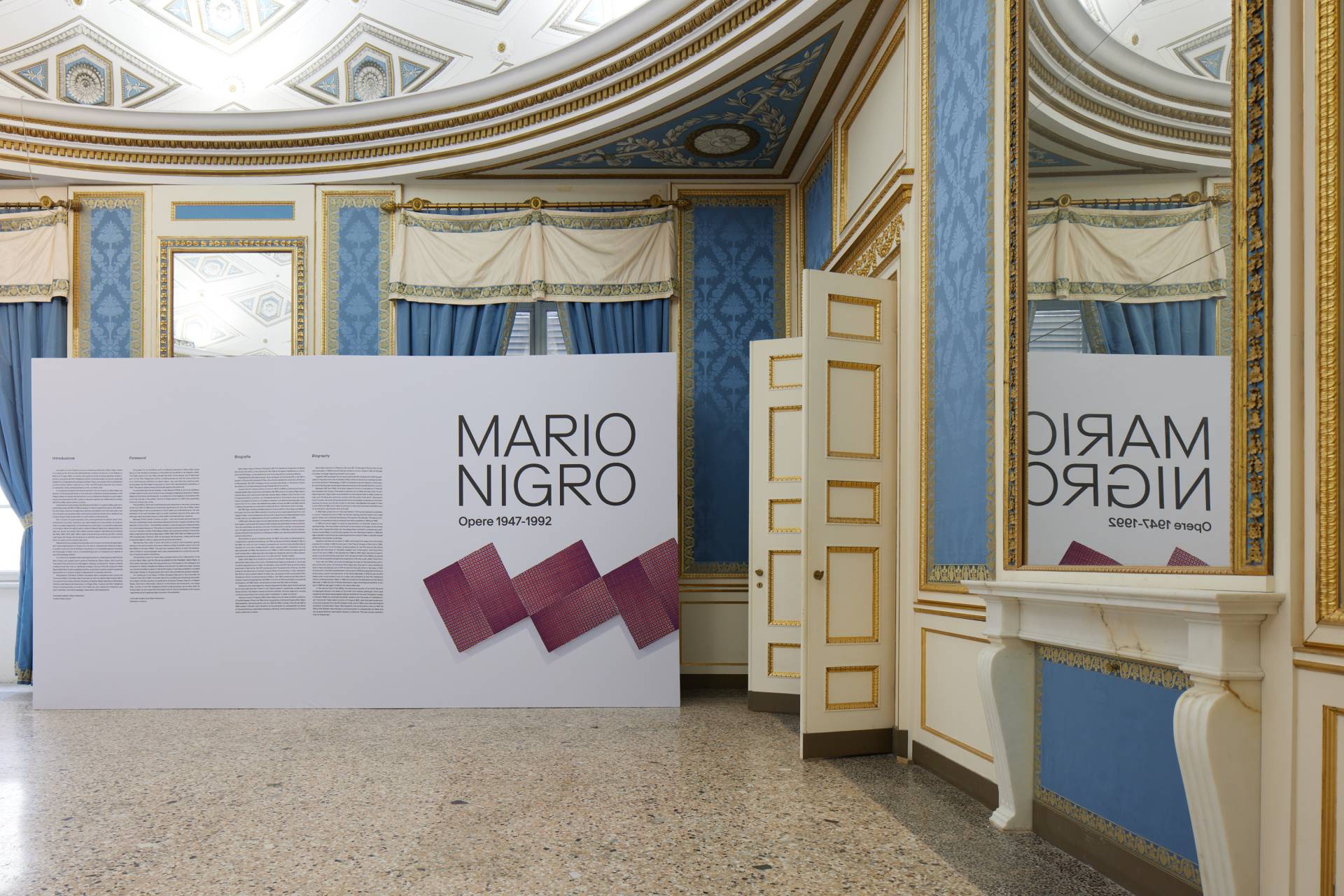
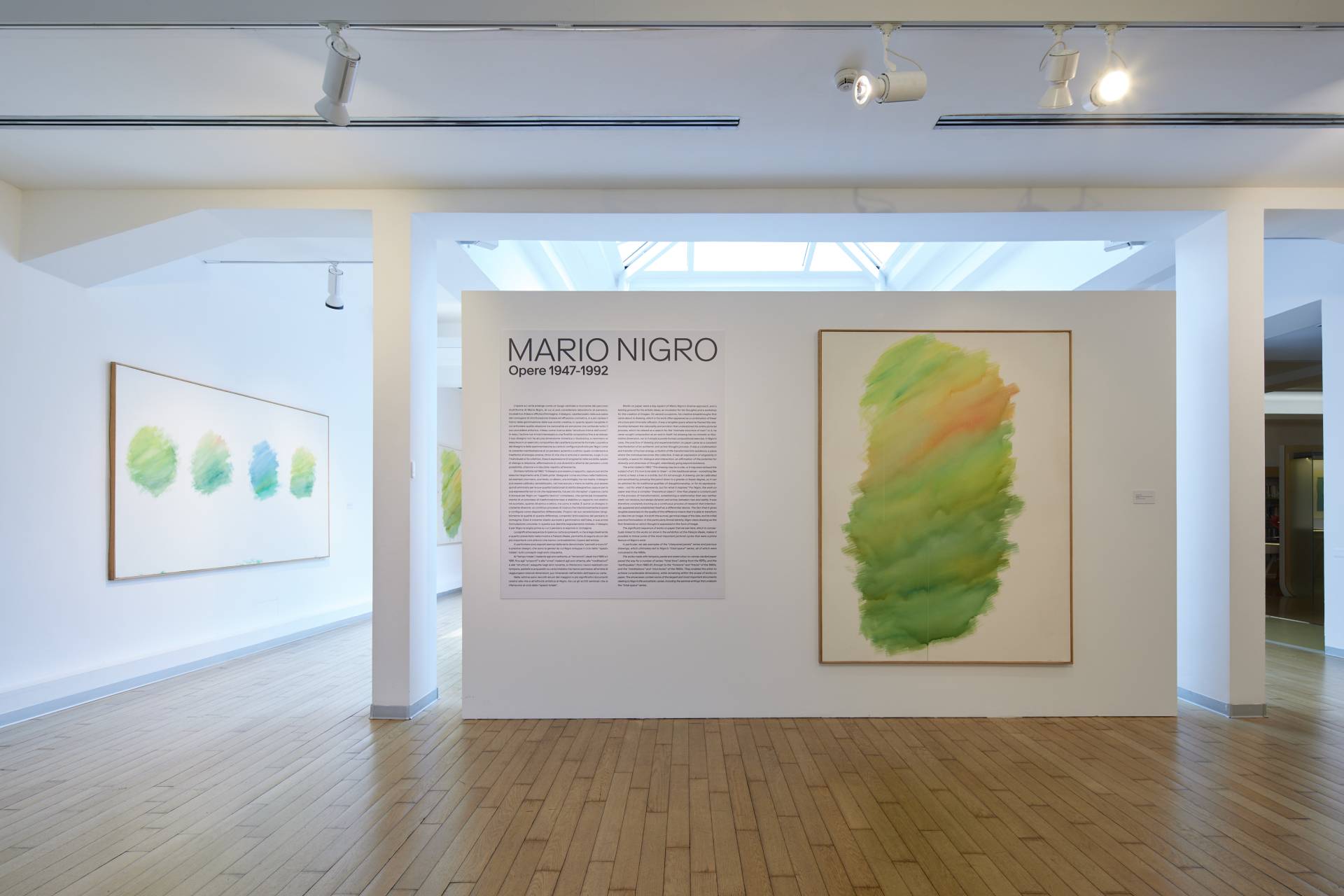
“Mario Nigro. Works 1947-1992”, Palazzo Reale, Milano The largest exhibition ever devoted to Mario Nigro (Pistoia, 1917 - Livorno, 1922), one of the great protagonists of the twentieth-century Italian art scene, held in Milan at Palazzo Reale and Museo del Novecento.
“Mario Nigro. Works 1947-1992” - First room, Palazzo Reale, Milano Mario Nigro’s artistic career began in the second half of the 1940s. His earliest works were the expression of a vision in which his understanding of music and his scientific knowledge played a decisive role.
“Mario Nigro. Works 1947-1992” - Second room, Palazzo Reale, Milano In 1952 Nigro started creating one of the most original series of his artistic career – that of “total space”.
“Mario Nigro. Works 1947-1992” - Third room, Palazzo Reale, Milano In addition to the historical events of 1956 came some tough personal circumstances that put a strain on Nigro’s ability to resist and in 1958 he decided to leave Livorno and his profession as a pharmacist and to move permanently to Milan.
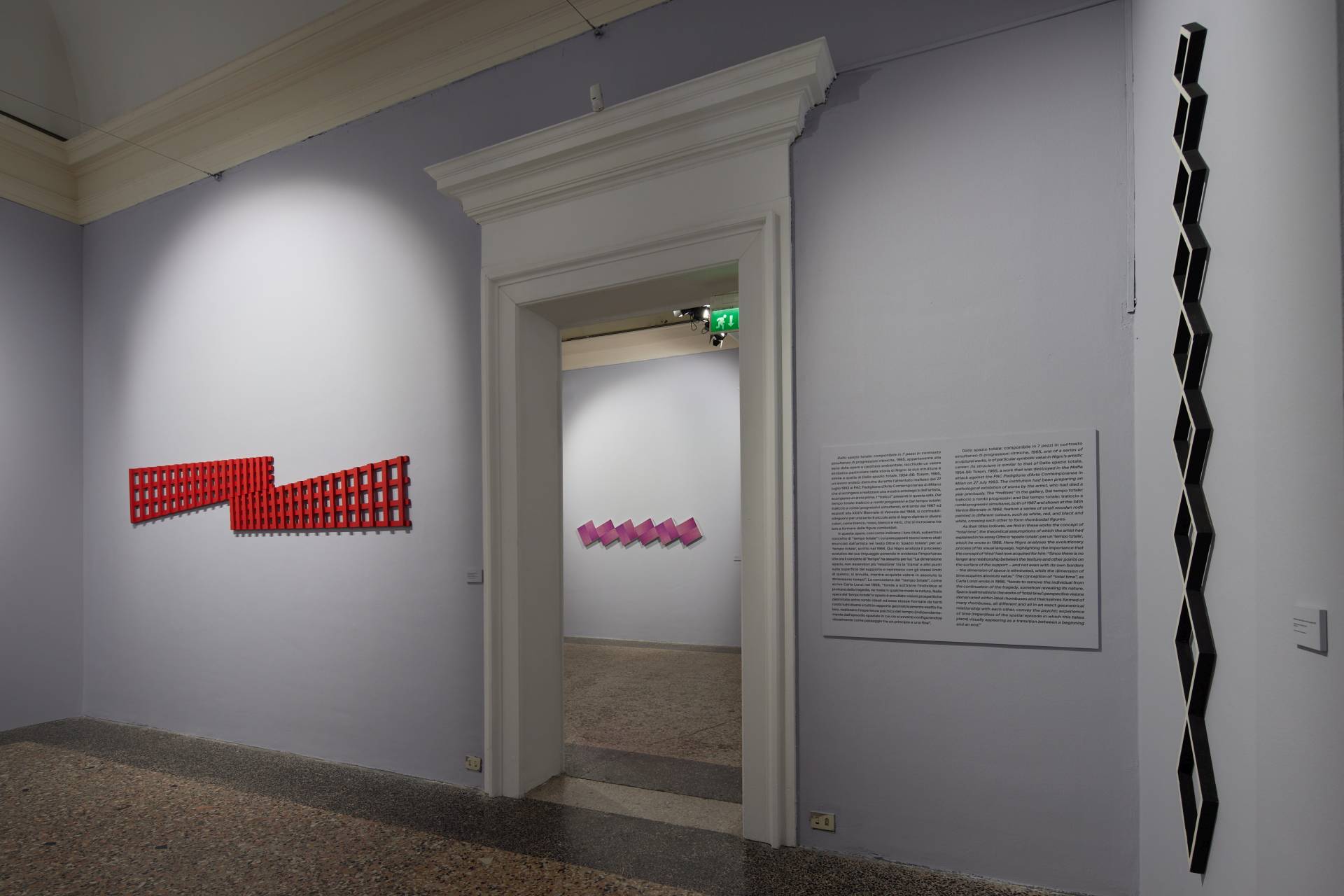
“Mario Nigro. Works 1947-1992” - Fourth room, Palazzo Reale, Milano In the mid-1960s, Nigro started combining the chromatic freedom of his works with the need to obtain a greater degree of geometric structuring, and this create a lively dialogue with the architectural setting.
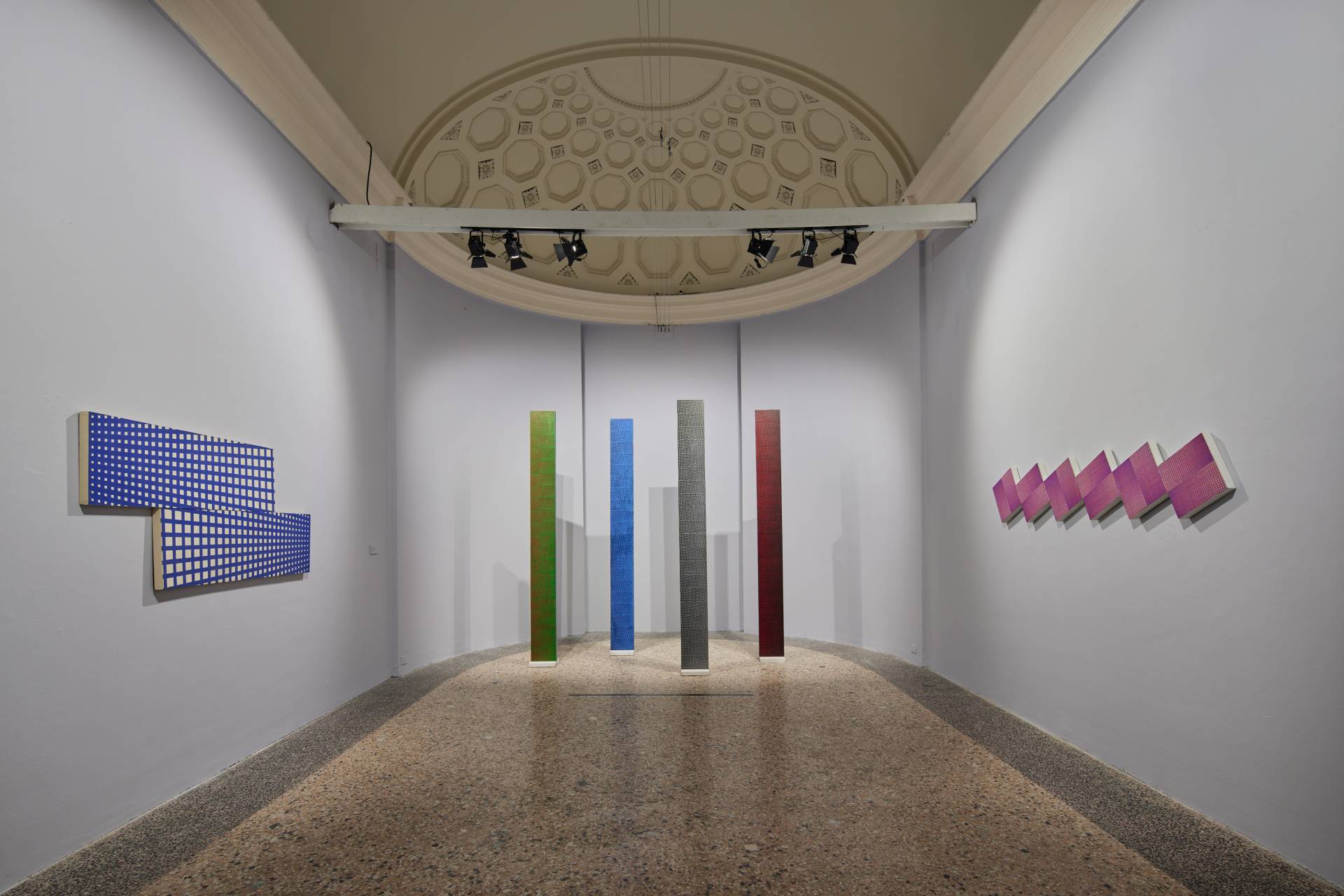
“Mario Nigro. Works 1947-1992” - Fifth room, Palazzo Reale, Milano Dallo spazio totale: componibile in 7 pezzi in contrasto simultaneo di progressioni ritmiche, 1965, one of a series of sculptural works, is of particular symbolic value in Nigro’s artistic career.
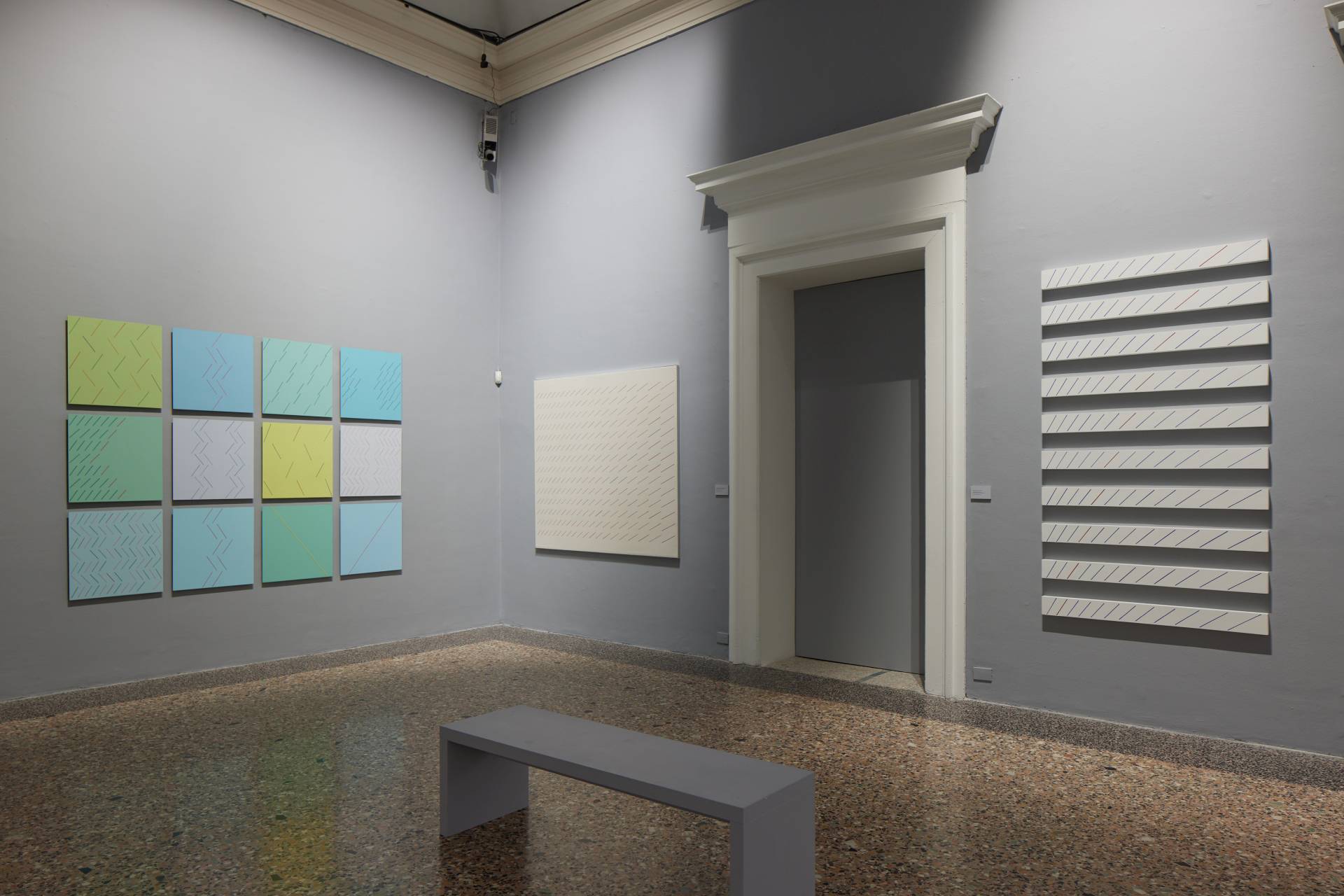
“Mario Nigro. Works 1947-1992” - Sixth room, Palazzo Reale, Milano From 1969 to 1979, Nigro’s painting related to the concept of “total time”. The line became the absolute protagonist in his art during this period, providing him with an opportunity for a profound reflection on his art.
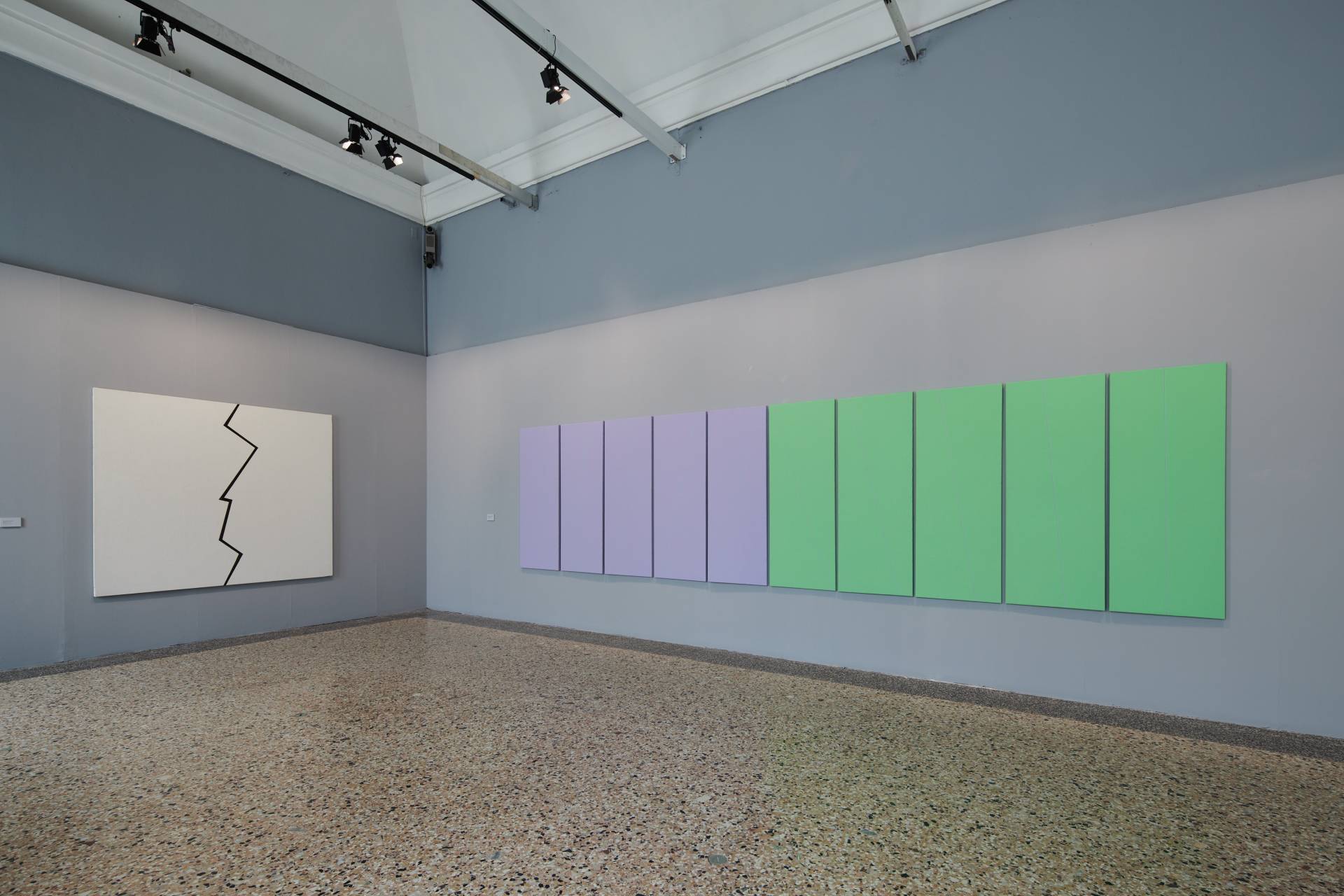
"Mario Nigro. Works 1947-1992” - Seventh room, Palazzo Reale, Milano In the “metaphysics of colour” series, a single line divides the panels asymmetrically, and the background features tones of green, lilac, sky and navy blue, and red.
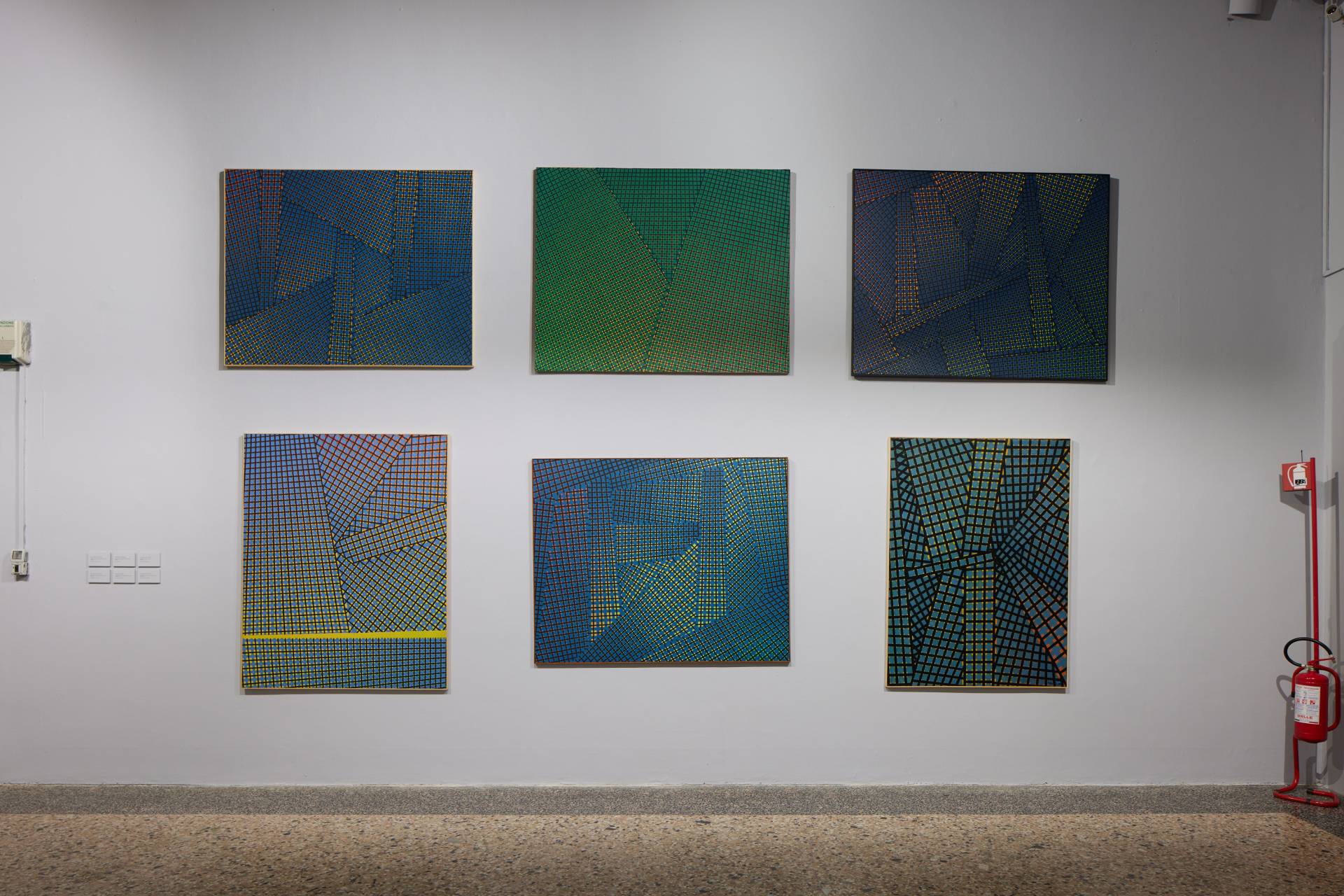
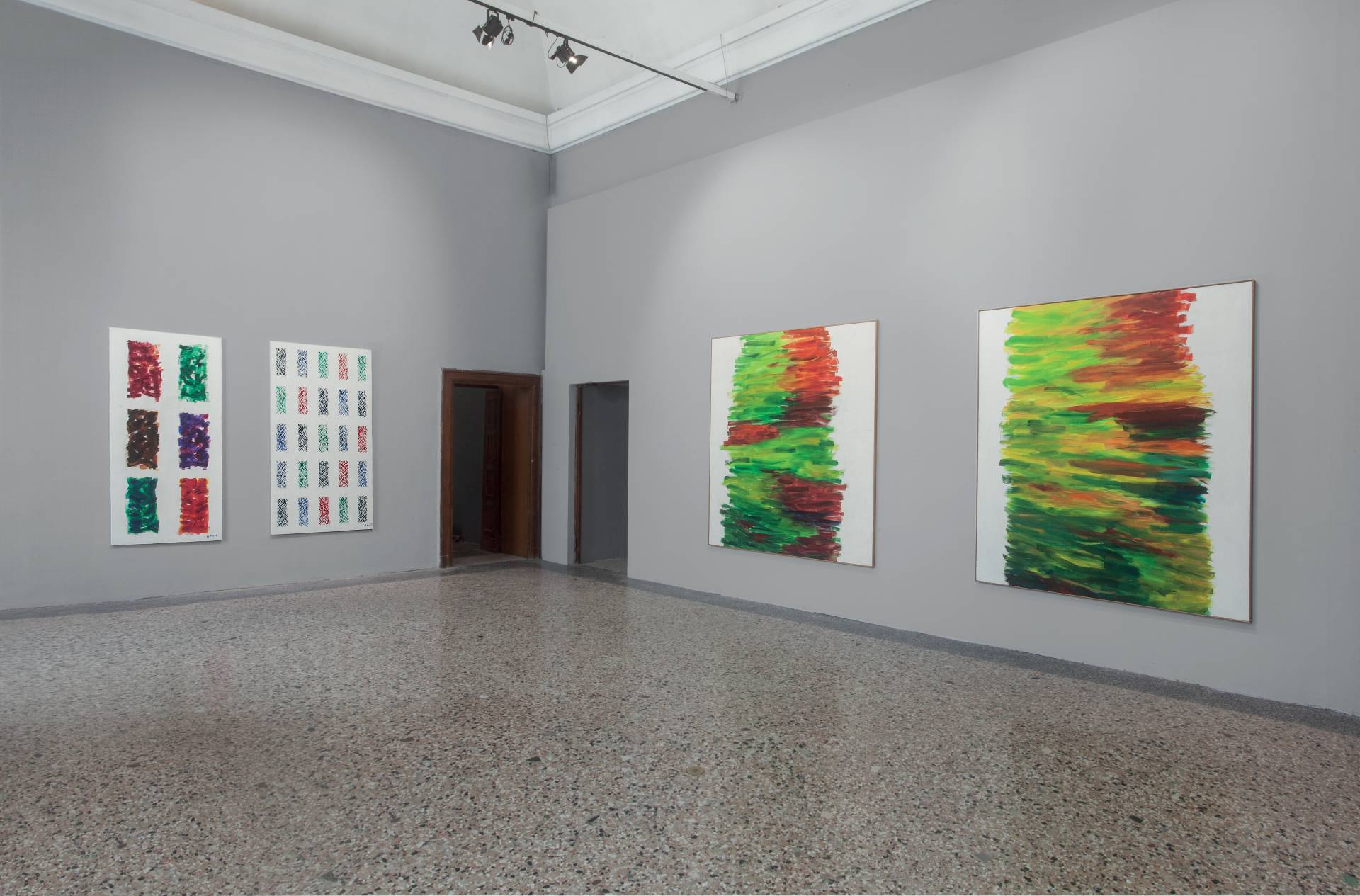
“Mario Nigro. Works 1947-1992” - Eighth room, Palazzo Reale, Milano From 1987 to 1992, the year the artist died, there were ever more series of paintings.
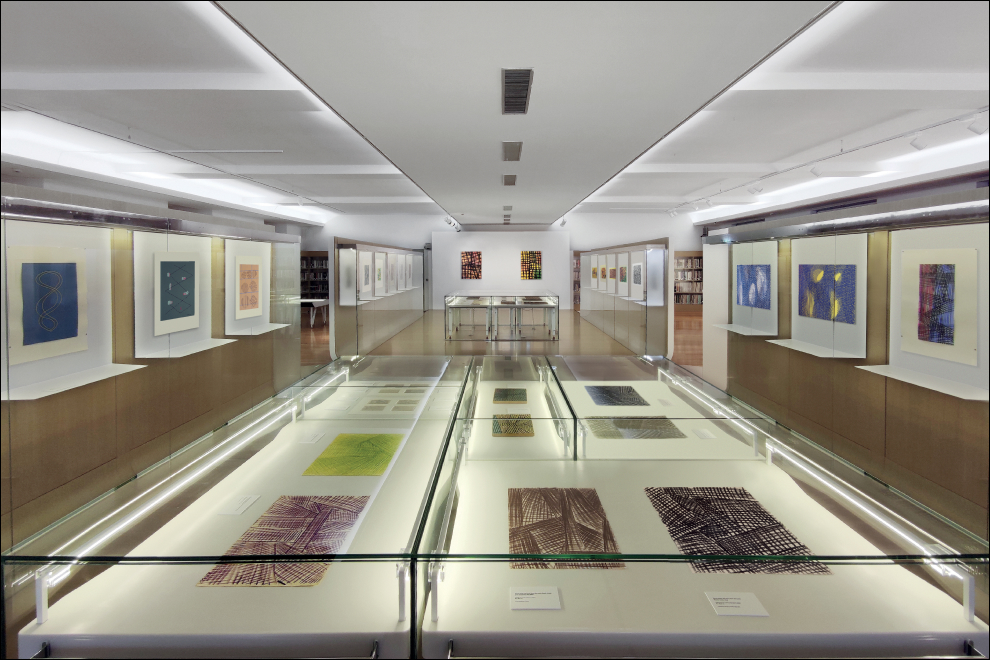
"Mario Nigro. Works 1947-1992" - First room, Museo del Novecento, Milano Works on paper were a key aspect of Mario Nigro’s diverse approach, and a testing ground for his artistic ideas, an incubator for his thoughts and a workshop for the creation of images.
Exhibition "Mario Nigro. Works 1947-1992" - Archive room, Museo del Novecento, Milano In Nigro’s case, the practice of drawing and experimentation on paper came as a constant manifestation of an authentic and active thought process.
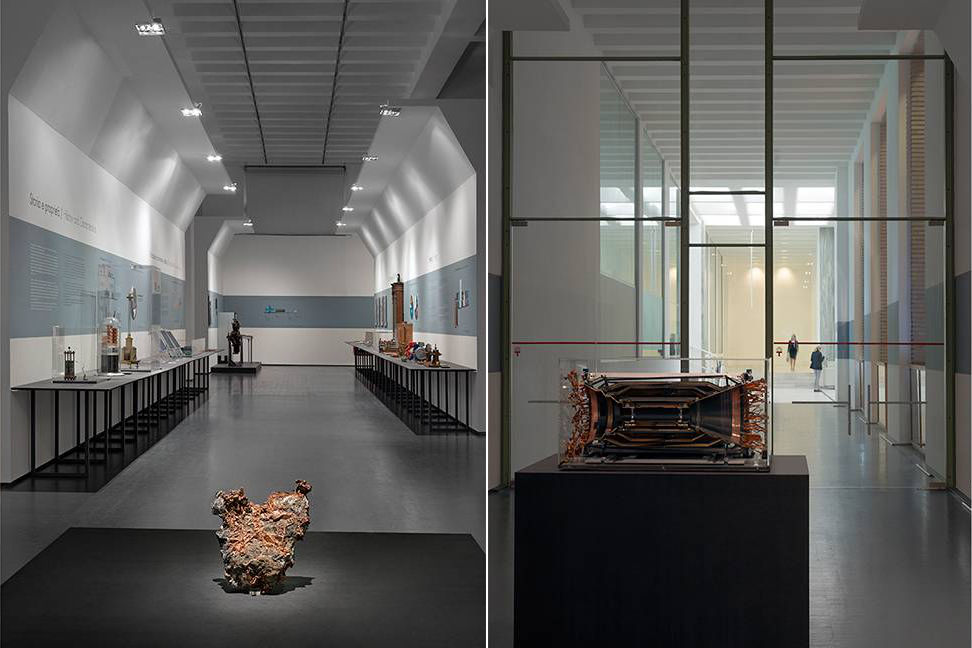
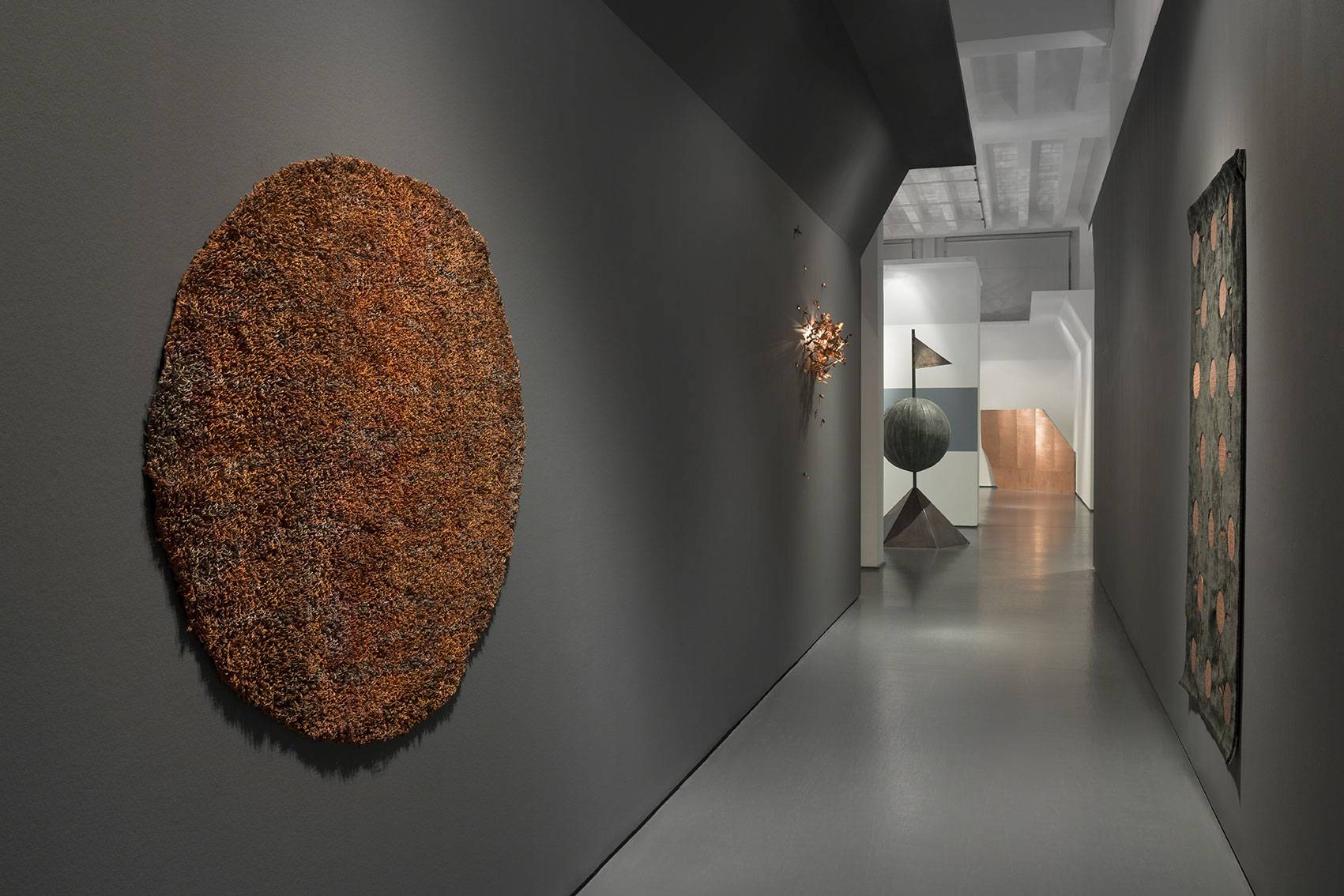
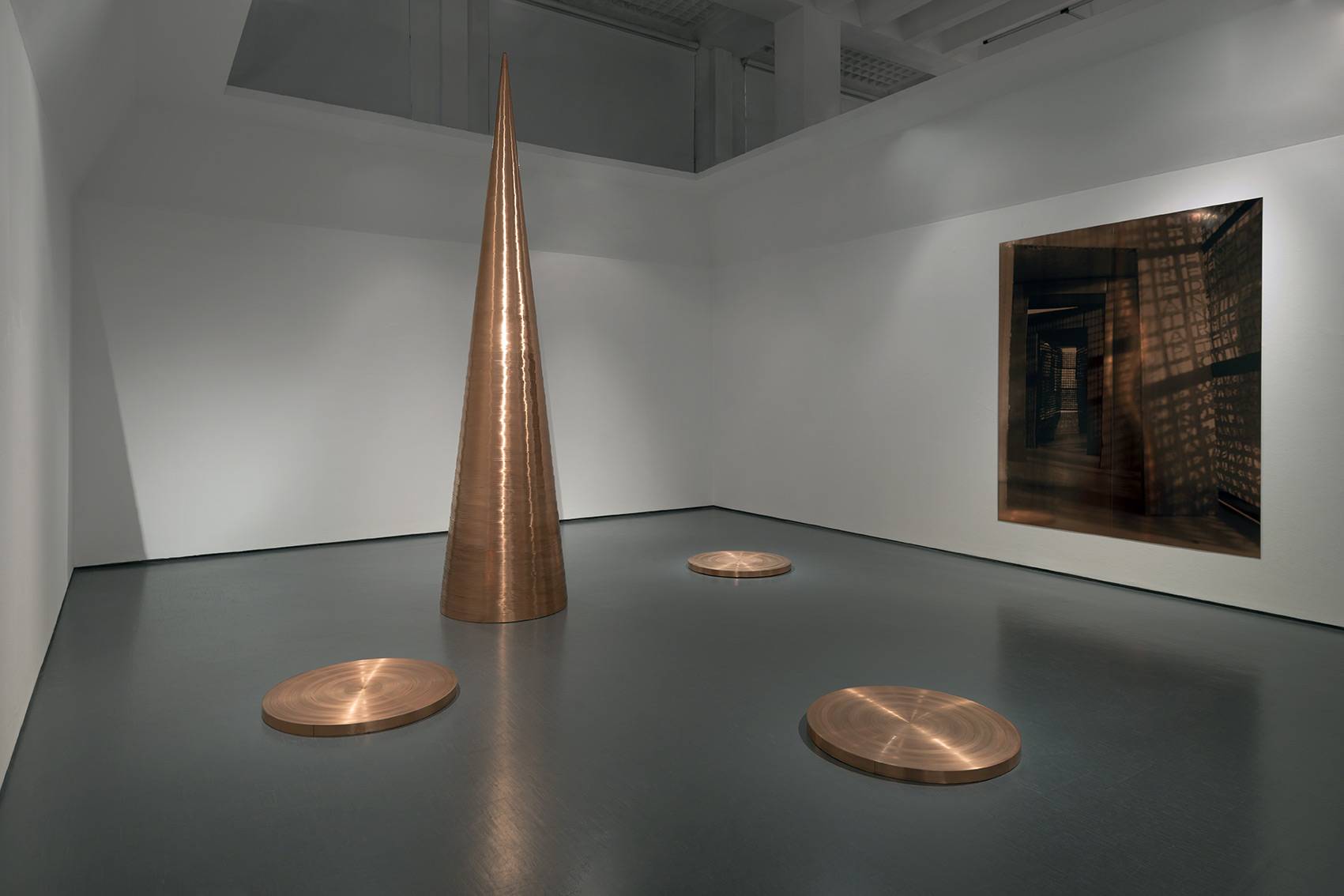
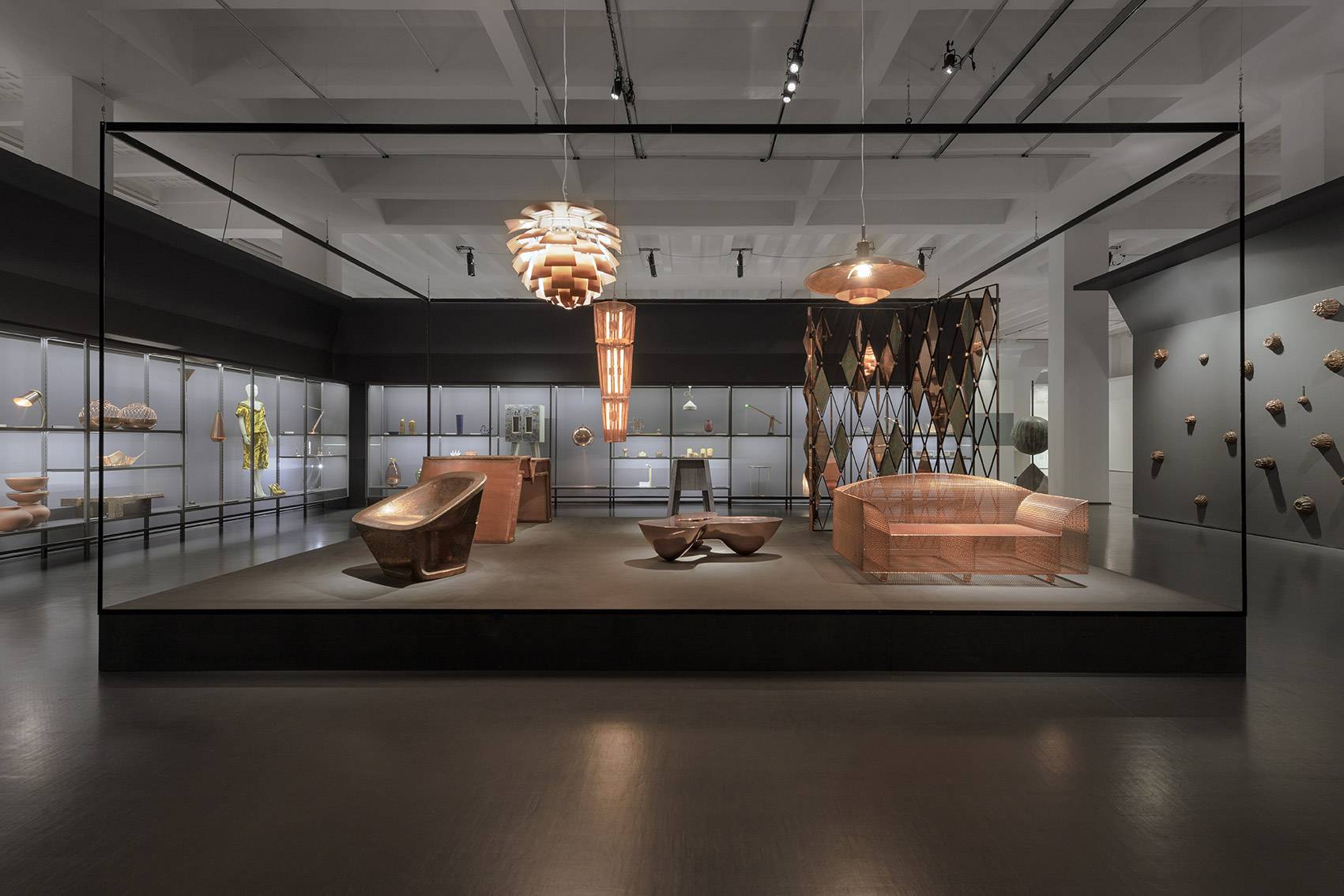
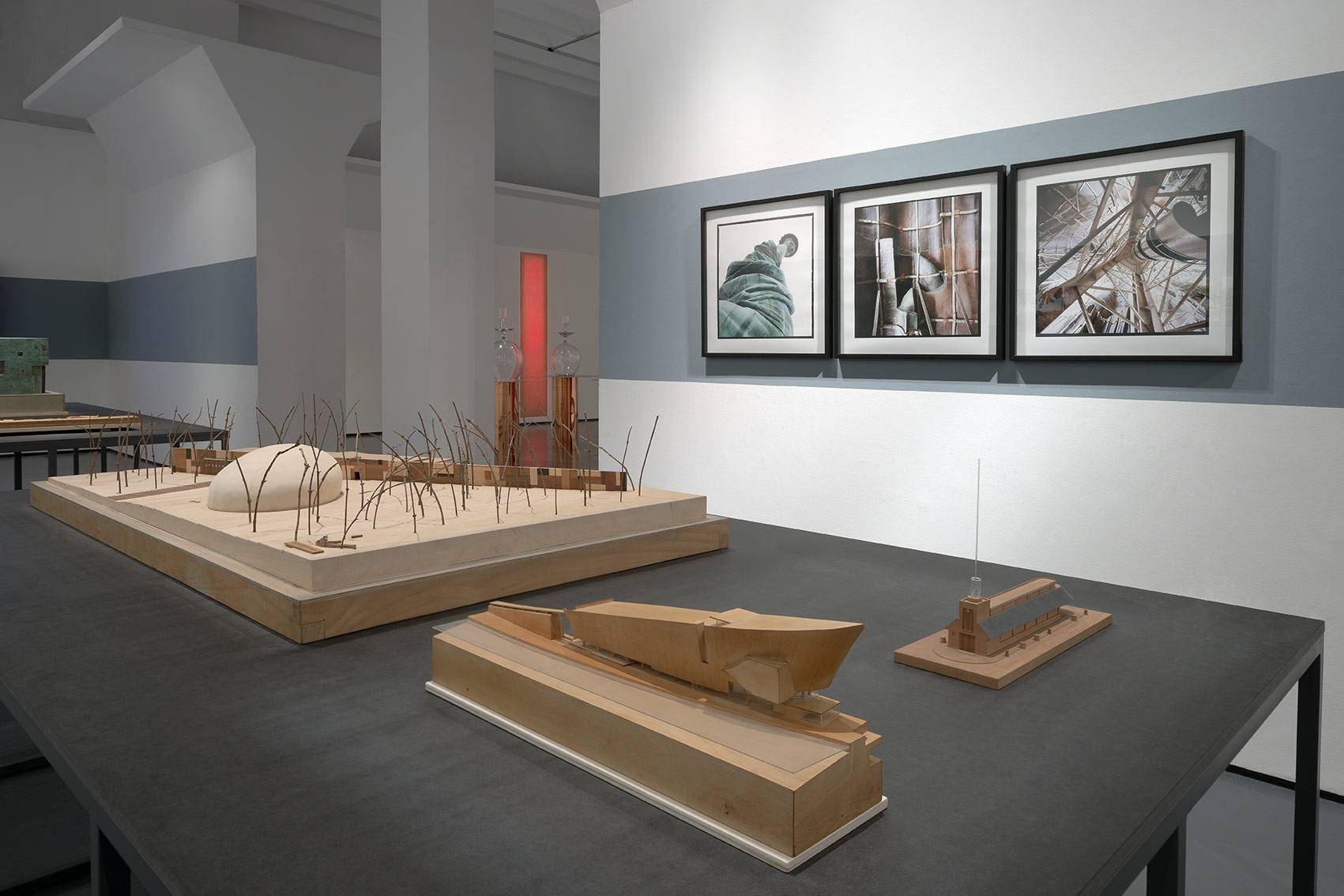
COPPER CROSSINGS. Copper Shapes in Contemporary Art, Design, Technology and Architecture Copper Crossings is the first exhibition looking at copper from a different point of view thanks to an interdisciplinary approach with more than 250 pieces representative of sectors of the exhibition.
Copper Crossings. Art section The section dedicated to contemporary art shows twenty-six works by artists who worked from the 1960s to the present day. It allows visitors to appreciate the evolution in the use of copper from Arte Povera to Minimal Art to the trends of recent years.
Copper Crossings. Design section Copper design has created growing interest, with surprising and often unusual results. The most well-known names in the industry have ventured in designing everyday objects drawn to copper shine but also by its oxidative processes and its technological evolution.
Copper Crossings. Technology section Copper is used in the most advanced sectors of technology. It is present in microprocessors and other electronic components. It is key material for IT and telecommunications. It is also a fundamental conductor of energy. Thanks to the contribution of Museo Nazionale della Scienza e della Tecnologia Leonardo da Vinci in Milan, the section devoted to technology has put on show numerous objects and applications of copper.
Copper Crossings. Architecture section Copper is used in architecture for its ability to blend into its surroundings, becoming an integral part of it. A number of architects have understood its potential and have included copper in some of their most important projects.
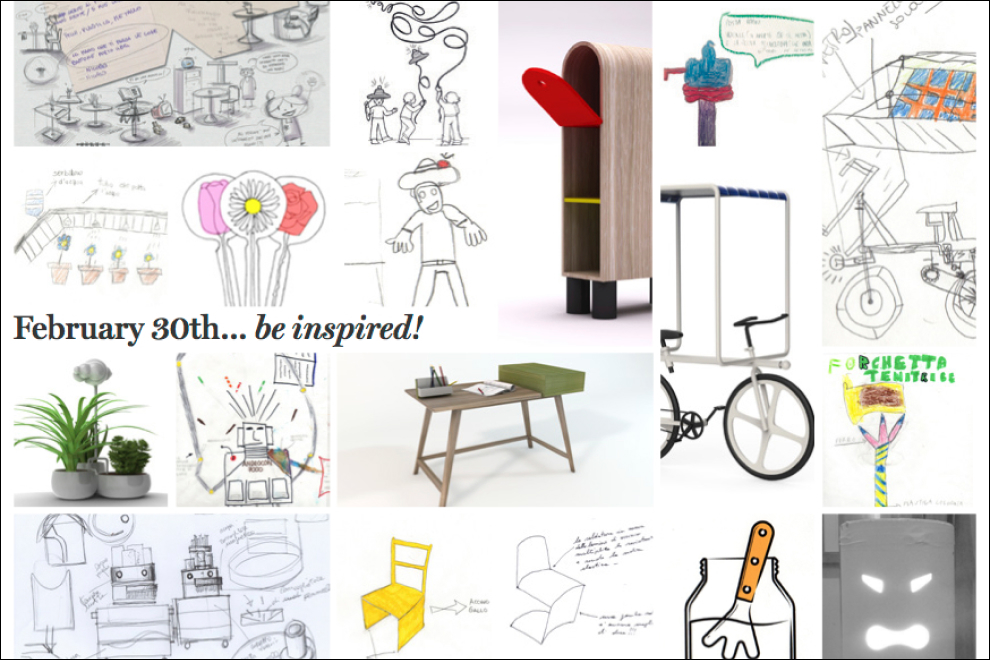
February 30th… be inspired! 11 designers deal with children creativity. Each designer selected a sketch of the object created by a kid from which he took inspiration to make a new design object.
The exhibition of these prototypes was shown at the Museo della Scienza e della Tecnologia of Milan during the Design Week in 2015.
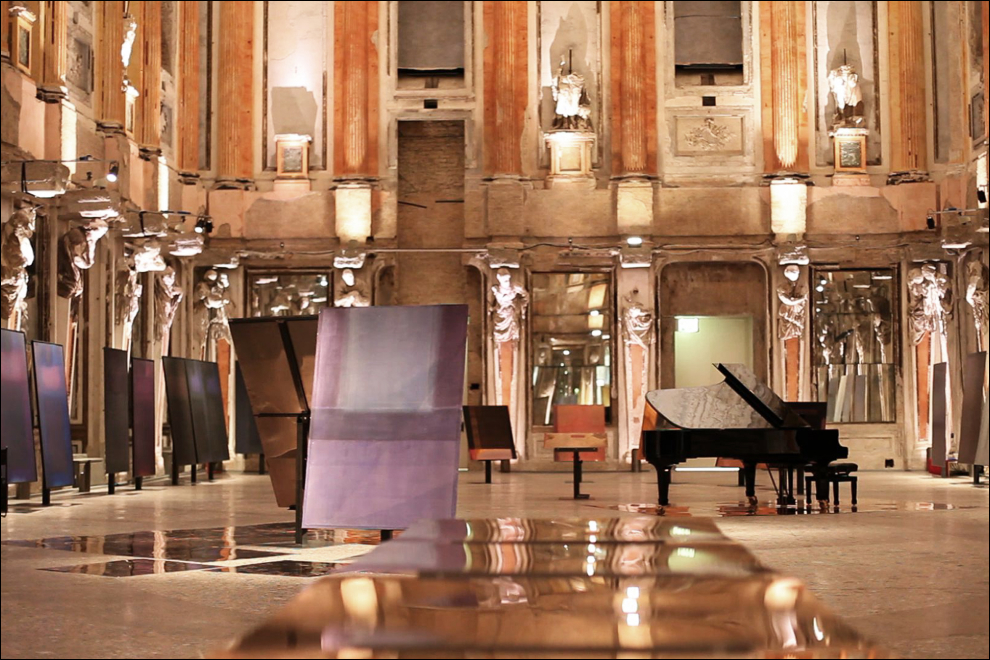
Roberto Ciaccio, INTER/VALLUM Music 26th November 2011 Performance of an original composition by Philip Corner and Lorna Windsor for gong and soprano, inspired by artist’s show/installation Inter/Vallum.
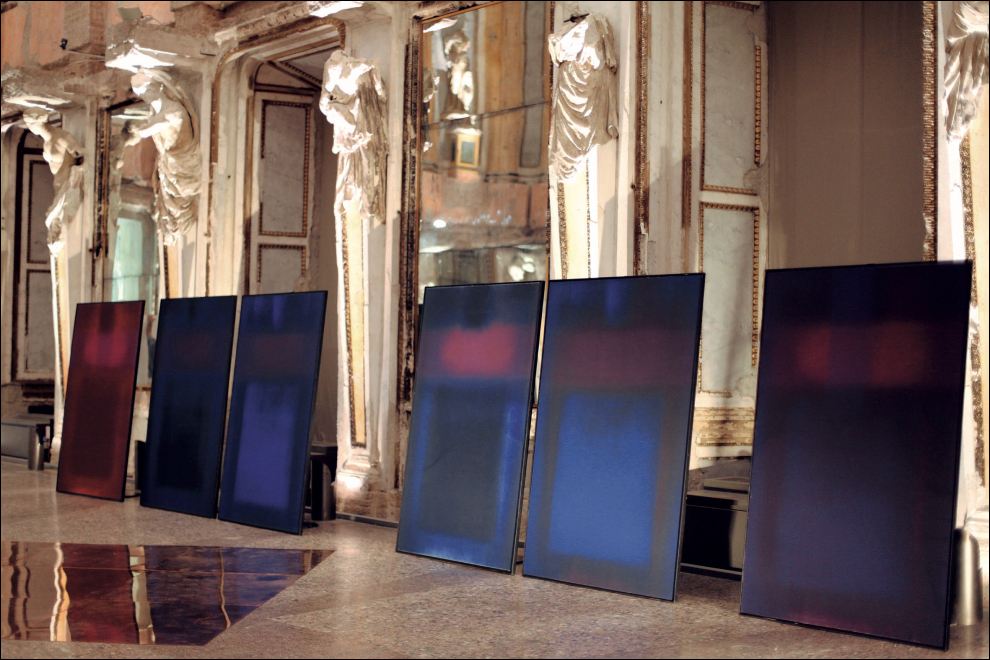
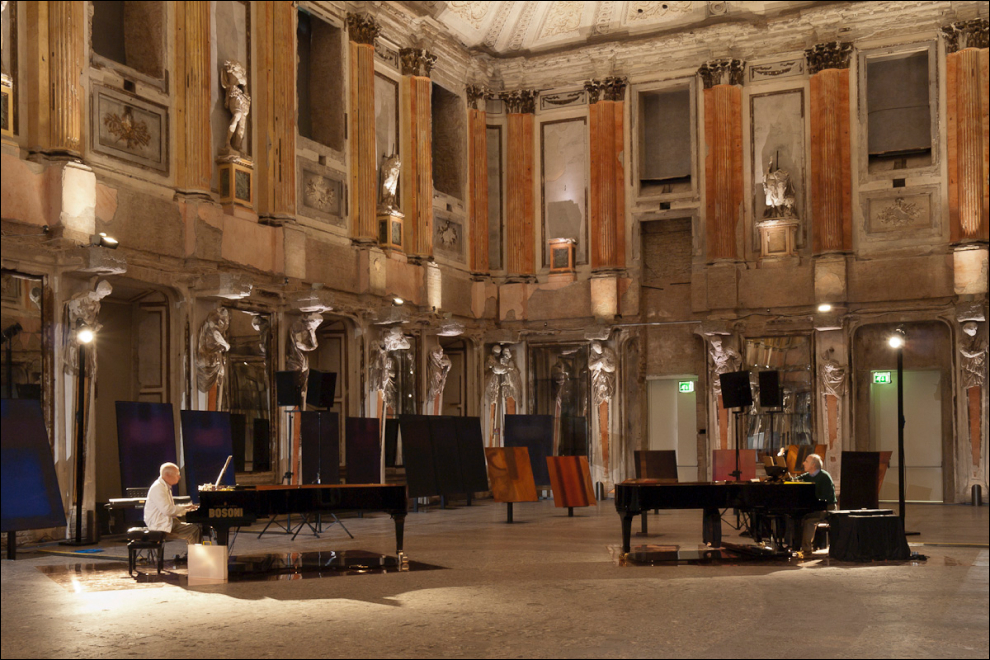
Roberto Ciaccio, INTER/VALLUM Roberto Ciaccio’s monographic exhibition entitled “INTER/VALLUM” intended to create a dialogue between the work of this contemporary artist and philosophy, music and modern architecture.
The exhibition, which was set out as a site-specific work/installation for Sala delle Cariatidi of Palazzo Reale in Milan, has been devised and planned thanks to Ciaccio’s collaboration with Kurt. W. Forster and Remo Bodei.
Roberto Ciaccio, INTER/VALLUM Music 20th September 2011 During the exhibition at Palazzo Reale, Antonio Ballista and Bruno Canino, after 35 years, have performed the mythic concert MANTRA by Karlheinz Stockhausen.